
Last updated November 15, 2026
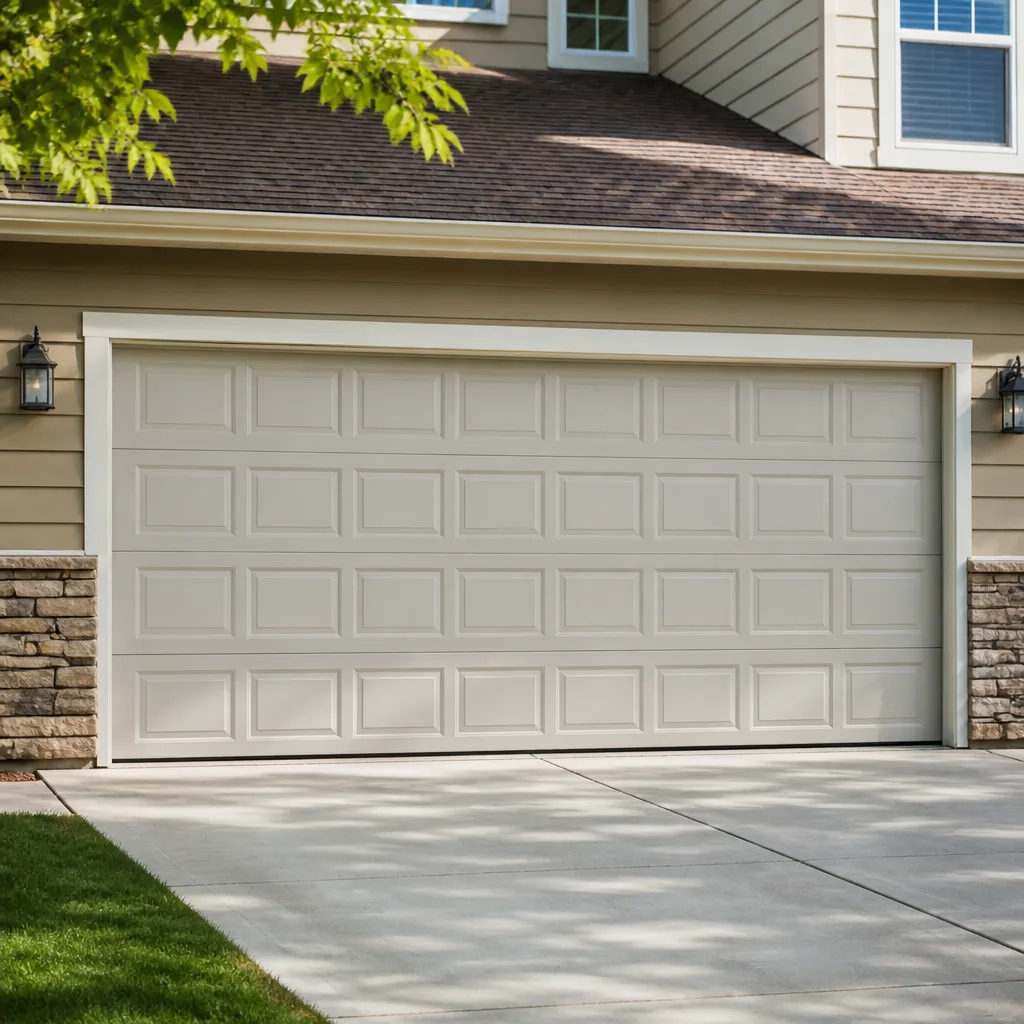 Raised-panel steel
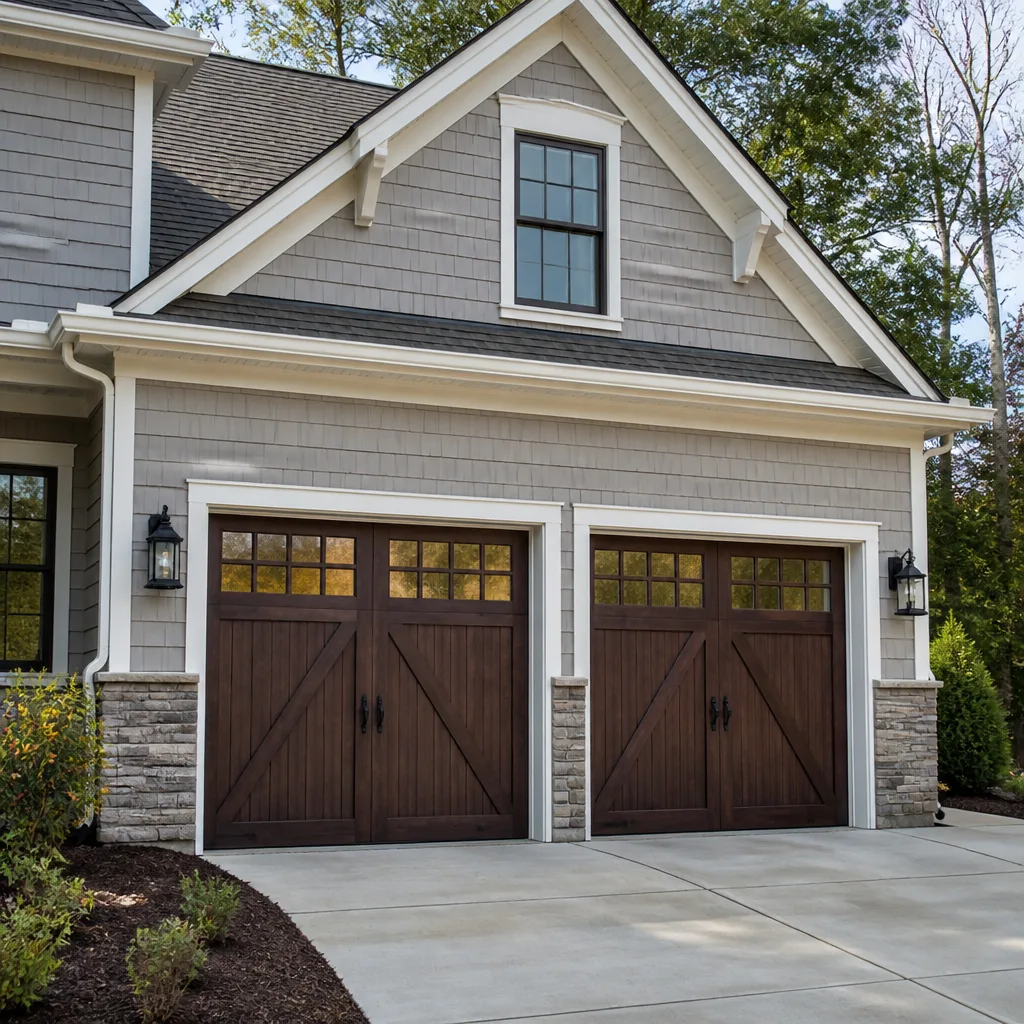 Carriage house
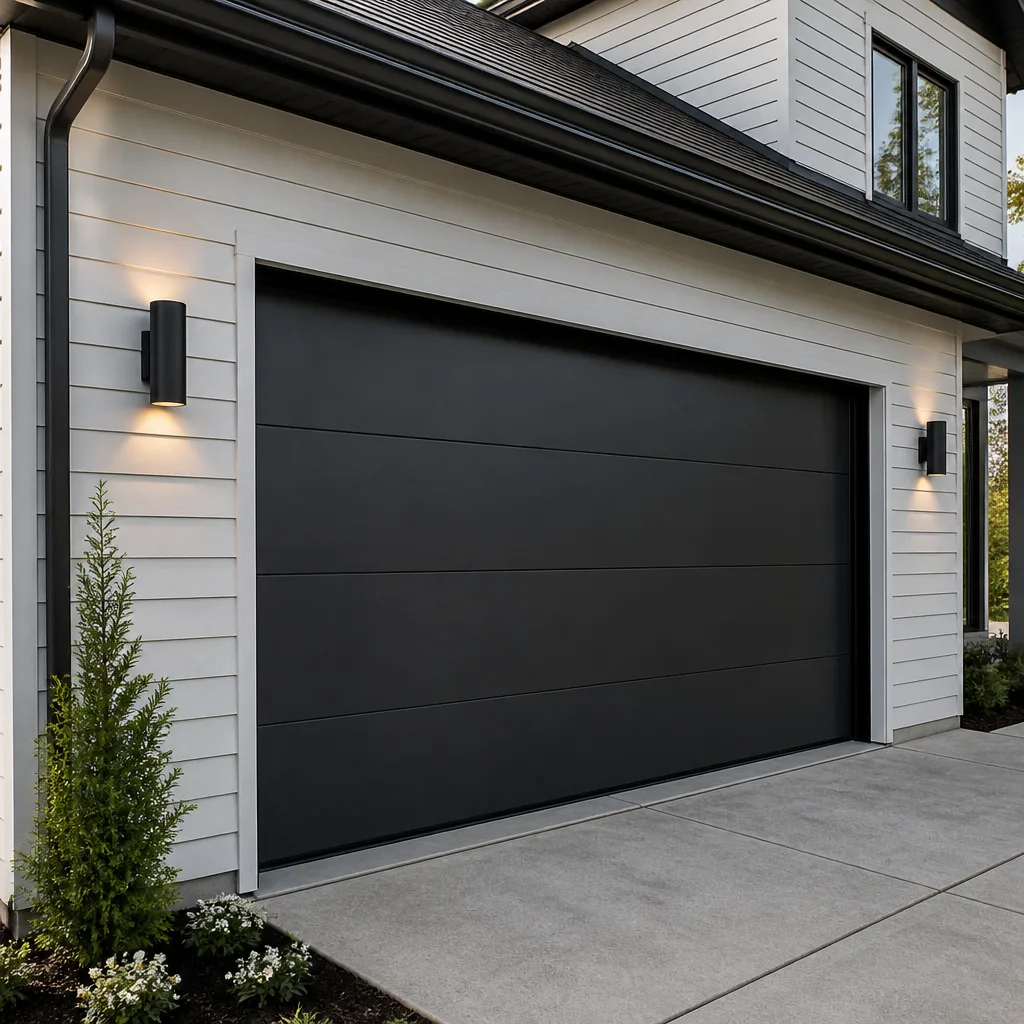 Modern flush
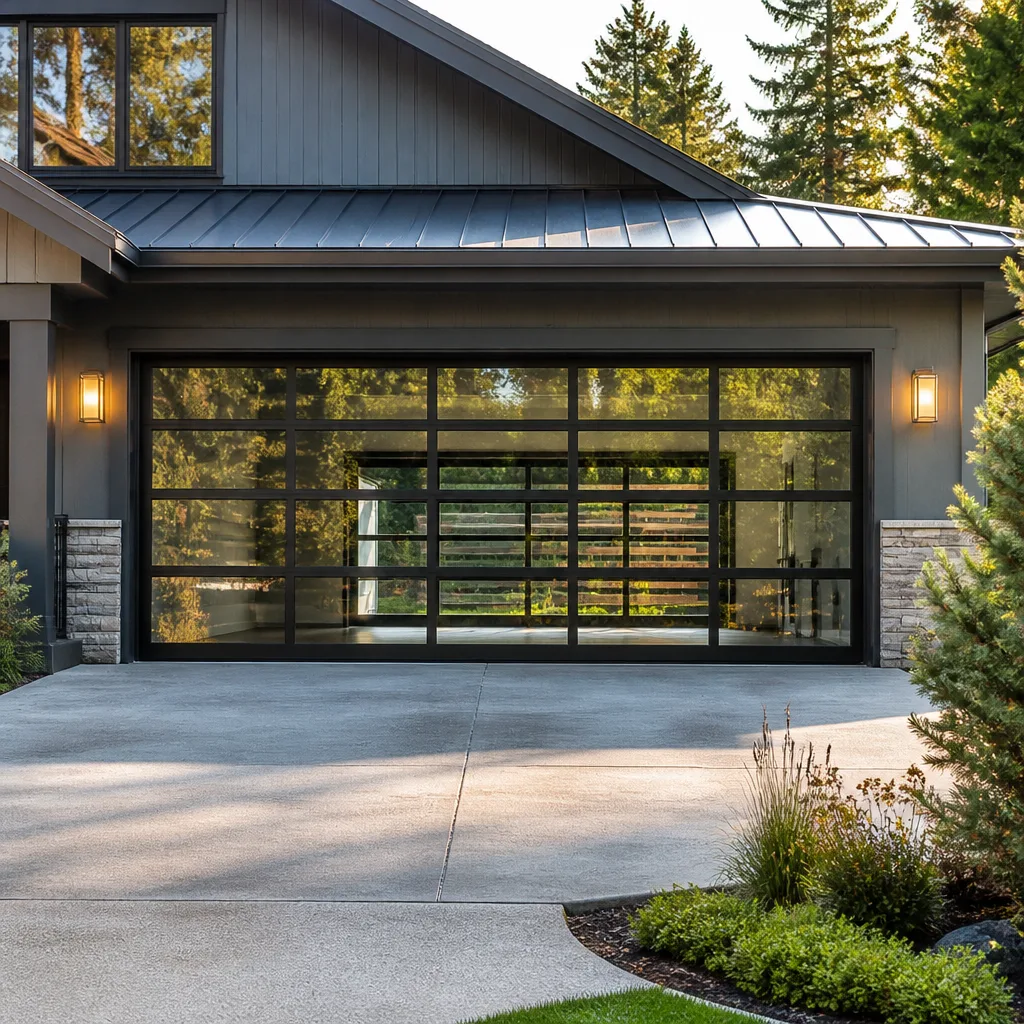 Full-view glass
 LiftMaster openers
 Chamberlain openers
Full 25-point door and opener safety check with every visit - springs, cables, rollers, tracks, and your LiftMaster or Chamberlain opener included
You get a price before we start. It does not change when the pro arrives.
Get your free estimateGarage Door Repair Troubleshooting in Birmingham: Common Problems and How to Fix Them
A door that reverses before it closes isn’t broken. It’s doing exactly what it was programmed to do. The safety reverse system has detected resistance and obeyed its own logic. Most homeowners read that behavior as a failure and reach straight for the opener, which is the most expensive way to miss the actual fault. A sagging door, a grinding track, or a bottom seal that’s torn loose will all trip a reverse on a perfectly healthy motor. This guide teaches you to read your door the way a technician does, tracing the symptom back to the component that’s actually causing it. You’ll learn which failures are Birmingham-specific, what you can safely check yourself, and when a spring or cable job belongs in trained hands. One call covers it when you’re ready.
Quick Answer
Most garage door problems in Birmingham trace back to a worn spring, a frayed cable, misaligned track, or a sensor knocked out of line – not the opener. You can safely check the sensors, the balance of the door, and your opener’s blink code yourself. Torsion springs, cables, and any work under tension require a trained technician because the stored force can cause serious injury. Reading the symptom correctly before you call usually means a faster, cheaper fix the first time.
Styles & brands we work with
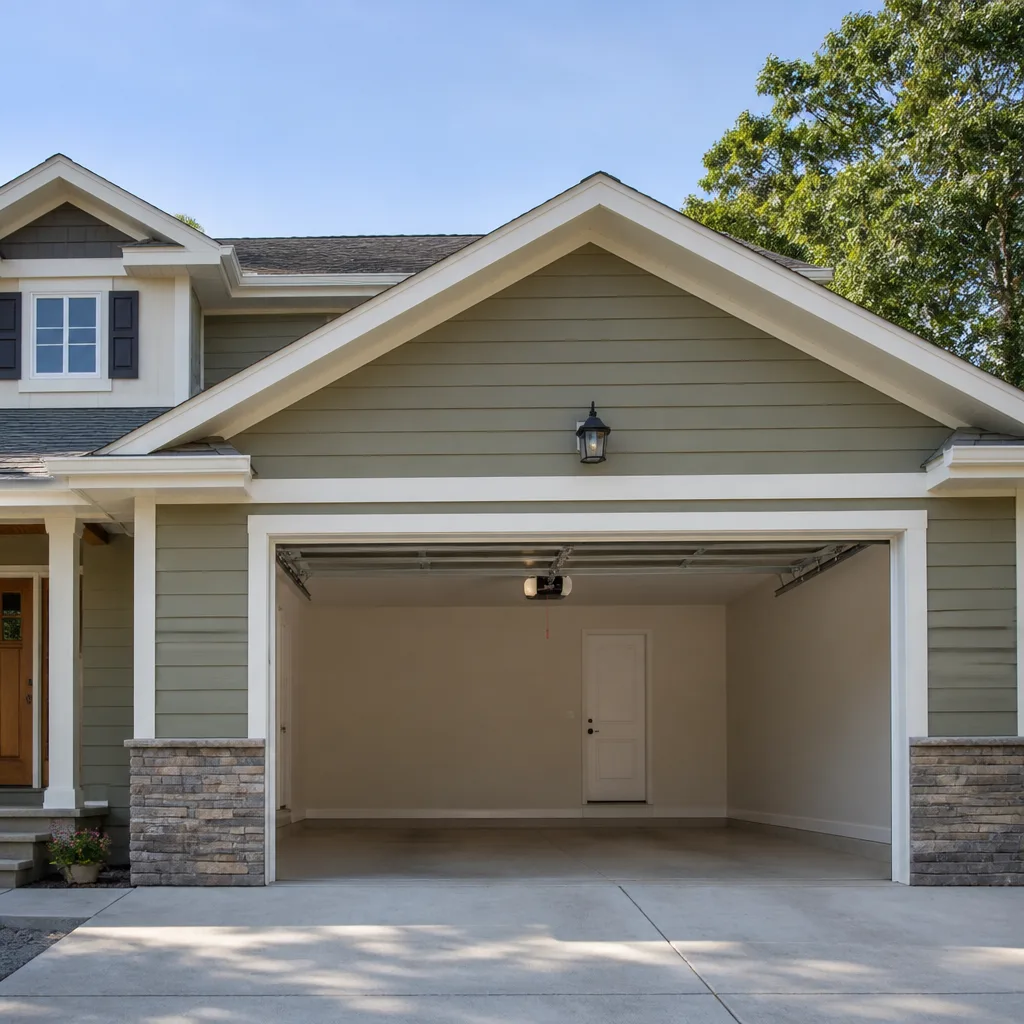
- Raised-panel steel
- Carriage house
- Modern flush
- Full-view glass
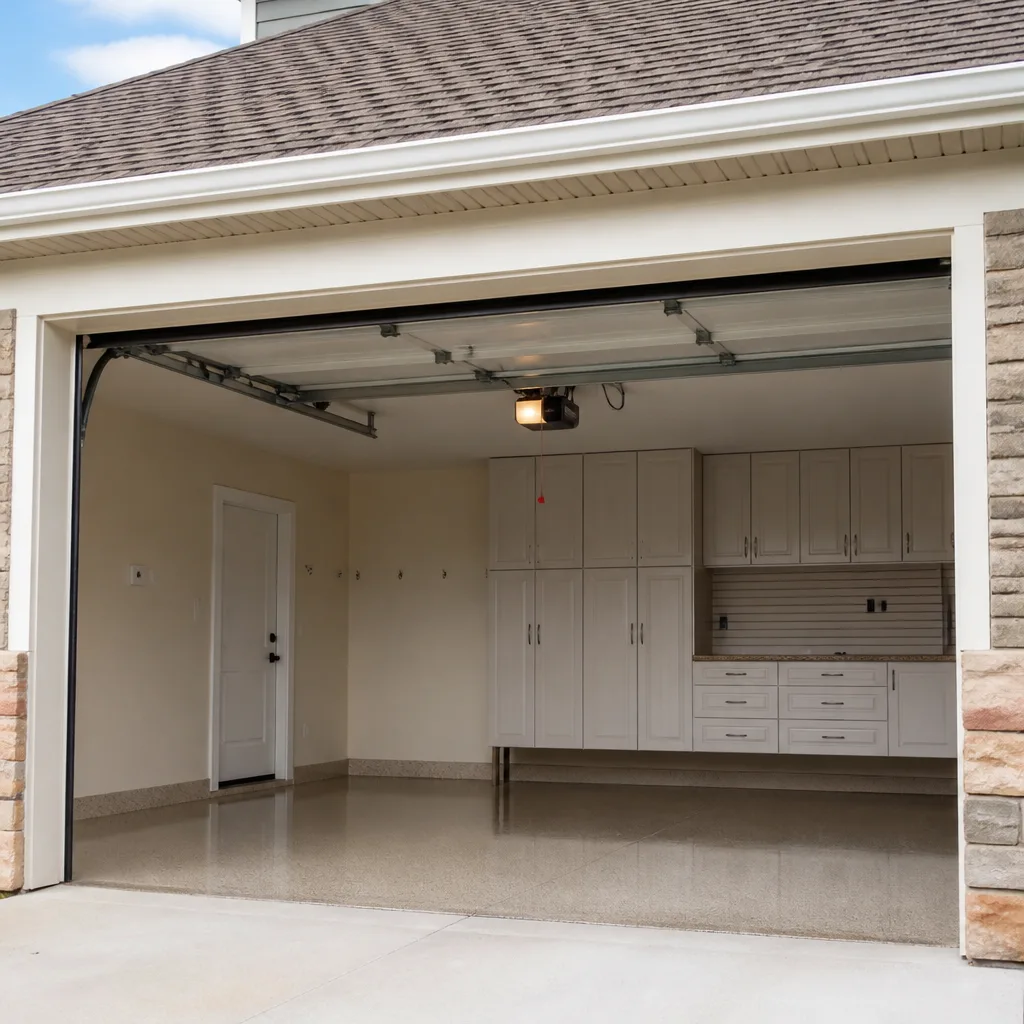
- LiftMaster openers
- Chamberlain openers
Table of Contents
- Symptom-to-Component Map: What Your Door Is Telling You
- Why Birmingham Humidity Accelerates Specific Failures
- What You Can Safely Check Yourself vs. What Needs a Technician
- How to Read Your Opener’s Blink Codes (LiftMaster, Chamberlain, Genie)
- The Misdiagnoses That Cost Homeowners Money
- How to Test Door Balance in Two Minutes
- Seasonal Troubleshooting: Heat, Cold, and Storm Cycles
- Repair vs. Replace: How to Tell Which Makes Sense
Symptom-to-Component Map: What Your Door Is Telling You
A garage door is a mechanical chain of parts that answer to each other. When one link weakens, the symptom shows up somewhere else entirely. A door that reverses on the way down has a completely different cause than a door that reverses on the way up, and a grinding noise during operation points to a different part than a grinding noise at rest. Learning to map the symptom to the component is the single most useful troubleshooting skill a homeowner can develop, and it’s the same thinking our technicians apply before they open a toolbox.
Here’s the mapping we work from, built across eight major door and opener brands including LiftMaster, Chamberlain, Genie, Clopay, Amarr, Wayne Dalton, Craftsman, and Raynor:
- Reverses immediately before touching the floor: almost always a safety sensor or the door’s upward pressure hitting resistance. Rarely an opener motor failure.
- Reverses on the way up or stalls partway: a spring losing tension, a frayed cable binding the drum, or a worn roller jumping the track. The opener is doing its job against a load it shouldn’t have to fight.
- Grinding or scraping along one side: a track that’s bent, out of plumb, or a roller that’s worn flat on one edge. Also common after a vehicle knocks the bottom panel.
- One side sagging or the door looking crooked: a broken spring on one side of a pair, or a cable that’s slipped a drum. Do not force the opener to keep cycling it.
- Wall button does nothing, remotes do nothing: a wall button unplugged or a logic board relay that’s failed. If the remote still works, look at the wall wiring first.
- Door works from the wall button but not the remote: remote battery, an antenna wire, or a receiver board inside the opener head.
- Loud bang from the garage, then the door won’t lift: a torsion spring has snapped. Stop operating the door and call for repair.
Notice how many of these read like opener problems and aren’t. The opener is a motor and a logic board. It doesn’t know if the door weighs 150 pounds or 300. It just applies force until something tells it to stop, and the safety reverse system is usually what stops it. When a homeowner in Birmingham calls saying “my opener is broken,” the actual repair is very often a spring, cable, or roller. Brand-matched diagnosis matters here because a Clopay door and a Wayne Dalton door wear on different parts at different rates, and generic service tends to replace the same obvious part rather than the one that’s actually failing.
Why Birmingham Humidity Accelerates Specific Failures
Central Alabama runs humid through most of the year, and garage interiors sit on the edge of that. A garage is rarely fully conditioned. It’s a semi-enclosed box that heats up in the afternoon, cools overnight, and pulls condensation onto cold metal. That daily heat and humidity cycle is why Birmingham door failures often show up sooner than a manufacturer’s maintenance schedule anticipates, and it’s why certain components wear faster here than they would in a dry climate.
The parts most affected:
- Cables: the steel strands in a lift cable develop surface oxidation in high humidity, and that oxidation becomes a pitting point where the cable frays. A cable that looks fine from the side can be failing just inside the drum where you can’t see it. Fraying cables are also why we recommend looking into garage door repair before a cable lets go and drops a corner of the door.
- Bottom seals: the rubber or vinyl bottom seal absorbs condensation off the concrete and cycles through expansion and contraction. It dries, cracks, and separates from the retainer. A torn seal lets water onto the floor and lets drafts and insects in, and it’s one of the cheapest fixes that homeowners put off longest.
- Hinges and rollers: humidity accelerates hinge squeak and roller wear. Many rollers will grind with a metallic squeal in our summer heat before the grease has fully cycled, particularly on the lower two hinges where water sits longest.
- Wiring: the low-voltage wires running from the safety sensors to the opener head and along the wall button circuit are exposed to garage humidity. A wire connection that’s rusted loose will read as a “dead sensor” even when the sensor itself is fine.
The practical takeaway is maintenance you can do without tools. After a heavy humidity stretch, look at the bottom seal and the two lower hinges. Push the door a few inches by hand once a month to feel for binding. Run the door and listen for a change in the sound. That’s the daily-care set most Birmingham homeowners skip, and it’s the one that buys time on the parts that cost the most to replace.
What You Can Safely Check Yourself vs. What Needs a Technician
Some troubleshooting is safe and useful. Some is genuinely dangerous. Springs and cables are the dividing line, because a torsion spring stores enormous force in its coils. When a spring is wound and holding, that force is there whether the door is up, down, or sitting parked. A snapped spring can whip with enough energy to cause serious injury. A cable that’s under tension can do the same. We’ve replaced hundreds of these in Birmingham and we still don’t work on a wound torsion spring without the proper winding bars and a clear head.
Here’s a practical split of what belongs to you and what doesn’t.
Safe to check yourself:
- Pull the opener’s manual release (the red cord) with the door closed and see if the door lifts and lowers by hand with reasonable effort. A very heavy door, or one that lifts a foot and stops, means a spring or balance problem.
- Look at the two safety sensors at the bottom of the track. Are they aimed at each other? Is the small LED on each one lit? Is the lens dusty or fogged?
- Press the wall button and see if the door responds. Then try a remote. If one works and the other doesn’t, you’ve narrowed the circuit.
- Watch each roller where it sits in the track as the door opens and closes. A roller that’s popped partly out is visible, and the door will bind on that side.
- Clear the path of the door’s travel. A stray item in the beam path will reverse the door all day long.
- Check the opener’s light for a blink pattern (see the next section).
Needs a technician:
- Any torsion spring work, adjustment, or replacement. This is hands-off for homeowners.
- Any work on cables or drums, whether the cable is stretched, slipped, or snapped.
- A door that has jumped its track and isn’t sitting plumb in both rails.
- An opener head that’s clicking, smoking, or tripping a breaker.
- A door that’s been hit by a vehicle, or whose bottom panel has pulled out of the stiles.
The dividing line isn’t about whether you’re handy. It’s about stored energy. An opener is a 110-volt motor with a safety reverse, and it’s forgiving. A torsion system is not. If a cable or spring is involved in your door’s failure, call a technician and let them handle it. For door opener repair in Birmingham, the same rule applies on the electrical side: opener logic boards and capacitors are component-level work that a hobbyist can get wrong and make more expensive.
How to Read Your Opener’s Blink Codes (LiftMaster, Chamberlain, Genie)
Most modern openers store a diagnostic code in their blink pattern and will tell you exactly which part they think is failing if you know how to read it. This is the single fastest way to get a part-level diagnosis before a technician arrives, and it’s the first thing our team checks on a LiftMaster, Chamberlain, or Genie head when we walk into a Birmingham garage. The pattern shows up on the opener’s own light or on the LED behind the lens cover, usually after a failed cycle or when the safety reverse trips.
How to trigger the code: stand back, press the wall button, let the door fail or reverse, then step out of the door’s path and watch the opener light for a repeated on-off pattern. It will repeat as long as you watch.
Reading LiftMaster and Chamberlain patterns (these two share a diagnostic language):
- One blink, pause, one blink: the safety sensors are not obstructed and not aligned, or the sensor wiring is cut. Look at the two sensor LEDs first.
- Two blinks: the safety beam was broken during travel, or the sensors are misaligned slightly.
- Three blinks: the safety reverse system has detected an obstruction or the door’s upward force is exceeding its limit. This is the code that appears when the door is heavy because of a spring problem, not an opener problem.
- Four blinks: the opener’s force setting needs adjustment or the motor’s travel limits have drifted. Often a sign the door has become harder to move than when the limits were set.
- Five blinks: the wall console is wired wrong, unplugged, or the button is shorted. The opener doesn’t see its control.
Reading Genie patterns: Genie openers use a variation, where the number of blinks after a failed cycle maps to a sensor (blinks in the 1 – 3 range usually point at the safety sensors or the power head’s connection), a programming error, or a motor limit. The exact count differs by model, but the principle is the same: short blink groups in the low single digits usually point at the sensors or wiring; longer groups or a constant flash point at the logic board or motor circuit.
Write the count down. Tell us what the opener said when you call. That one detail saves a lot of diagnostic time. If you’ve already replaced a sensor or a battery and the code hasn’t changed, the code is telling you the problem is somewhere else, and that’s exactly where a brand-matched diagnosis starts. Working on the door in front of us, not just the one brand we happen to stock, is what keeps us from chasing the same symptom twice.
The Misdiagnoses That Cost Homeowners Money
Many of the “it needs a new opener” calls we get in the Birmingham area turn out to be a $150 problem, not a $900 one. The three most expensive misdiagnoses we see all follow the same pattern: the homeowner blames the biggest, most visible component instead of the small part that’s actually failed.
- Sensor blamed for a cable problem. A sensor that trips every time is not necessarily misaligned. If the door is binding on the way down because one cable has stretched, the bottom edge of the door will flex and the sensor will read a phantom obstruction. Replacing sensors doesn’t fix a cable, and the door will continue to strain.
- Opener blamed for track misalignment. A track knocked out of plumb will make the door grind and bind, and the opener will eventually overheat trying to push through it. A new opener installed on a bent track will fail the same way, often sooner, because the new motor runs at higher force.
- Motor blamed for worn rollers. A roller that’s worn flat or seized will drag, the door will sound strained as it lifts, and the opener will read higher current draw. New rollers are a fraction of the cost of a new motor. Replacing the motor first and the rollers later means you’ve paid twice to fix one problem.
The through-line is that these three failures all show up as “the door behaves badly and the opener strains.” The way to break the tie is to test the door by hand: pull the manual release and lift. If it’s smooth and light, the problem is in the opener or its sensors. If it’s heavy, binding, or won’t stay up, the problem is in the door and the opener is a symptom. You can read more about what a proper diagnosis looks like on our Prospect Garage Door Repair homepage, including how we match parts to your brand rather than to whatever’s on the shelf.
How to Test Door Balance in Two Minutes
A balanced door takes roughly the same force to lift by hand whether it’s at the bottom, middle, or top of its travel. An unbalanced door fights you at one spot and feels light at another. This test is the fastest way to tell whether a spring is doing its job or whether the opener is carrying the door’s full weight (and failing because of it). You’ll need the door closed and no one else using the garage.
- Stand safely inside the garage, to one side of the door. Never stand under a door that’s up, and never put your fingers in the hinges.
- Pull the red manual release cord to detach the door from the opener. The door should be at rest and should not fall.
- Lift the door to about waist height by hand, letting the handle carry your grip. It should move with moderate effort, not strain.
- Let go. A balanced door with a working spring will hold or drift very slowly down. A door that falls fast, or crashes, has a failed or weak spring. Stop here and call us.
- Lift it to shoulder height and let go again. Same test. Then lift to the top and see if the door stays up on its own.
- Reconnect the manual release only if the door held at each stage and you’re confident it’s balanced. If any stage failed, keep the door disconnected and call a technician before running the opener again.
This test tells you the difference between a door problem and an opener problem in under two minutes. A door that fails at any point isn’t safe to cycle with the motor, because the opener will keep forcing it and strain the logic board, the gear, and the spring. If your door holds through the whole test but the opener still fails, the problem is in the head or the sensors, and that’s where we look next. If you’re not comfortable with any step, stop and call a technician. A balance check is information, not a repair.
Seasonal Troubleshooting: Heat, Cold, and Storm Cycles
Birmingham’s weather gives a garage door more range than most people realize. Summer afternoons push garage temperatures high enough that metal expands and lubricants thin out. Winter mornings are cool enough that grease stiffens and a marginal spring can finally give. Spring brings heavy rain and the humidity spike we covered above. Storms knock branches onto roofs and drive water into tracks. Each seasonal shift brings a predictable set of failures, and knowing which one you’re in helps narrow the diagnosis.
Summer heat: the door’s upward force requirement drops slightly as metal expands, but the lubricant on hinges and rollers thins and migrates. A door that squealed in April may go quiet in July and start grinding again in August. Check for squeal at the hinges after the first hot stretch.
Cool snaps: the door’s upward force requirement creeps up because stiff grease resists the rollers, and a spring at the end of its life can fail. If the door suddenly won’t open all the way on a cold morning, don’t assume a motor problem. Pull the release and try by hand first.
Storm season: this is when the bottom panels get hit by vehicles pulling in during a downpour, the tracks get knocked by debris, and the bottom seal shows what winter rain did to it. A door that’s not sitting flat after a storm is a track problem until proven otherwise. Hail isn’t common in Birmingham, but wind-driven branches and storm debris do more than enough, and the impact damage is usually a panel or a track rather than a motor.
Humidity spikes: the weeks after heavy rain are when sensor wiring fails at the terminals and the bottom seal tears. Check the bottom edge of the door and the sensor connections after a week of rain.
The useful habit is to run the door once after any big weather swing and listen. Every Birmingham homeowner can do that. It’s the cheapest diagnostic in the trade, and it catches the small failures before they turn into a snapped spring or a bent track.
Repair vs. Replace: How to Tell Which Makes Sense
Repair is the right call most of the time, and replacement is the right call when repair becomes a series of repairs on a door that’s near the end of its life. The honest answer depends on the door’s condition, the cost of the current repair, and how many of the door’s components are already worn. Because we install doors as well as repair them, we don’t have a reason to push one answer over the other, and we’d rather tell you to repair a door that has years left in it than sell you a replacement you don’t need.
When repair makes sense:
- The door is structurally sound, the panels are intact, and the only failure is a spring, a cable, a roller set, or a hinge.
- The opener is the failure and the door itself is fine. Opener repair or replacement is a separate decision from the door.
- A single panel was damaged and can be matched, particularly on brands like Clopay where replacement panels are available.
When replacement starts to make more sense:
- The bottom panel is rusted through, the stiles are separating, and multiple panels are failing at once.
- The door is out of plumb and the tracks have been repaired more than once.
- The opener is old and failing alongside a door that’s nearing the end of its useful life, and the combined repair approaches the cost of a new door and opener.
- The door’s design can’t be matched panel-for-panel, and a mismatched repair would look wrong from the street.
If the door is still sound, repair is usually the right answer. If the door is failing in three places at once, replacement is the cheaper long-term call. Our team installs new doors across the same eight brands we repair, so the advice you get is based on the door in front of us. If you’re not sure which side of the line you’re on, describe the symptom and let us help you sort it. Building a proper picture of the door’s wear happens over a short conversation, not a sales pitch.
Common Mistakes to Avoid
- Replacing the opener first. A new opener on a heavy or binding door will fail the same way as the old one, and you’ve paid for a motor you didn’t need. Diagnose the door first by pulling the release and lifting by hand.
- Running the door repeatedly when it reverses. Each failed cycle strains the logic board and the gear, and on a spring problem it can cause a sudden failure. Stop, read the code, and call a technician.
- Oiling a track. Lubricant on the track attracts dirt and makes the rollers slide instead of roll. The rollers and hinges get lubrication, not the rail surface.
- Adjusting the torsion spring yourself. The springs are under enough tension to cause serious injury, and the wrong winding bar setup can turn a repair into an emergency. This is the one part of the door that isn’t a homeowner fix.
- Ignoring the bottom seal through a Birmingham summer. A torn seal lets water onto the floor, deteriorates the bottom panel, and lets rodents in. Replacing it before it fails is much cheaper than panel repair.
- Standing under a moving door to “see what’s happening.” Watch from the side, with the door in clear view. If a cable or spring fails while you’re underneath, the door can come down.
- Believing a generic sensor fix is a full repair. If the door still strains after a sensor alignment, the sensors are fine and the problem is upstream. Recheck the door balance before buying any parts.
See the difference
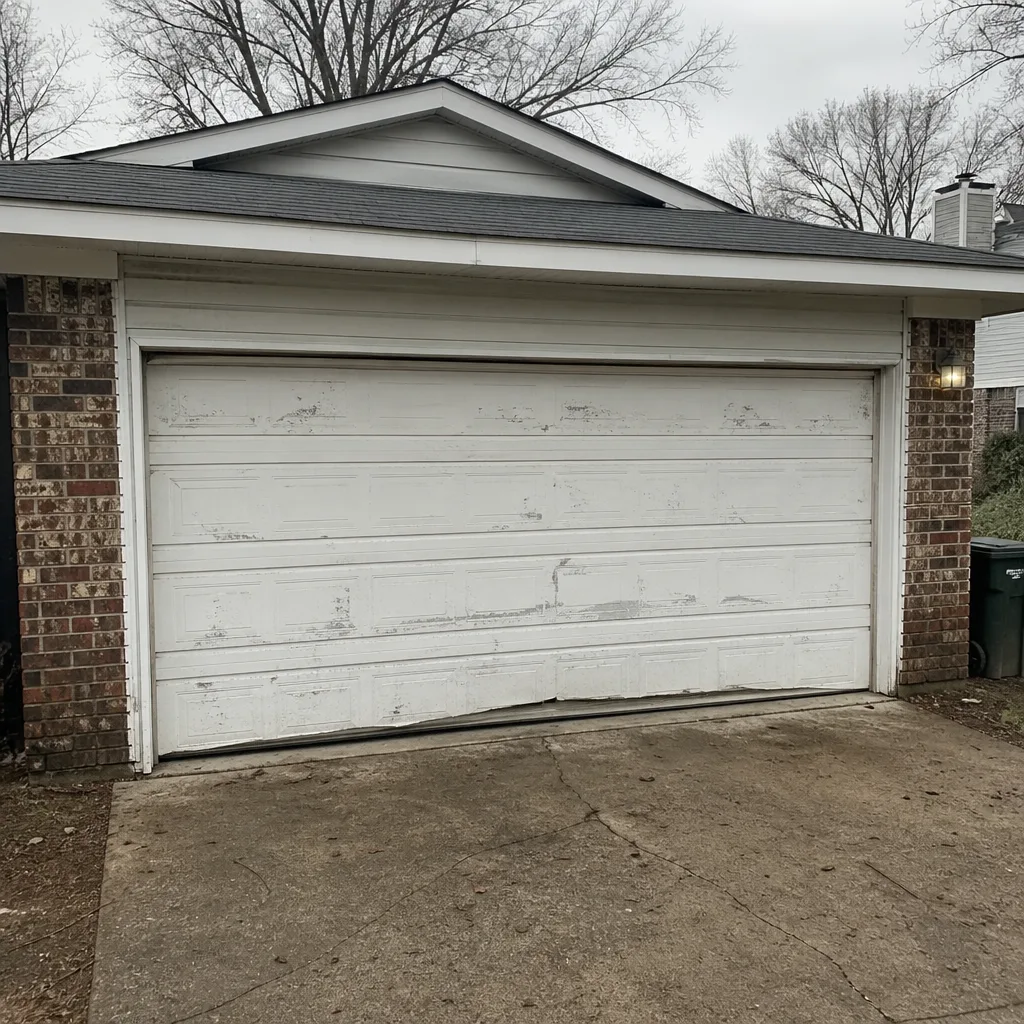 Before
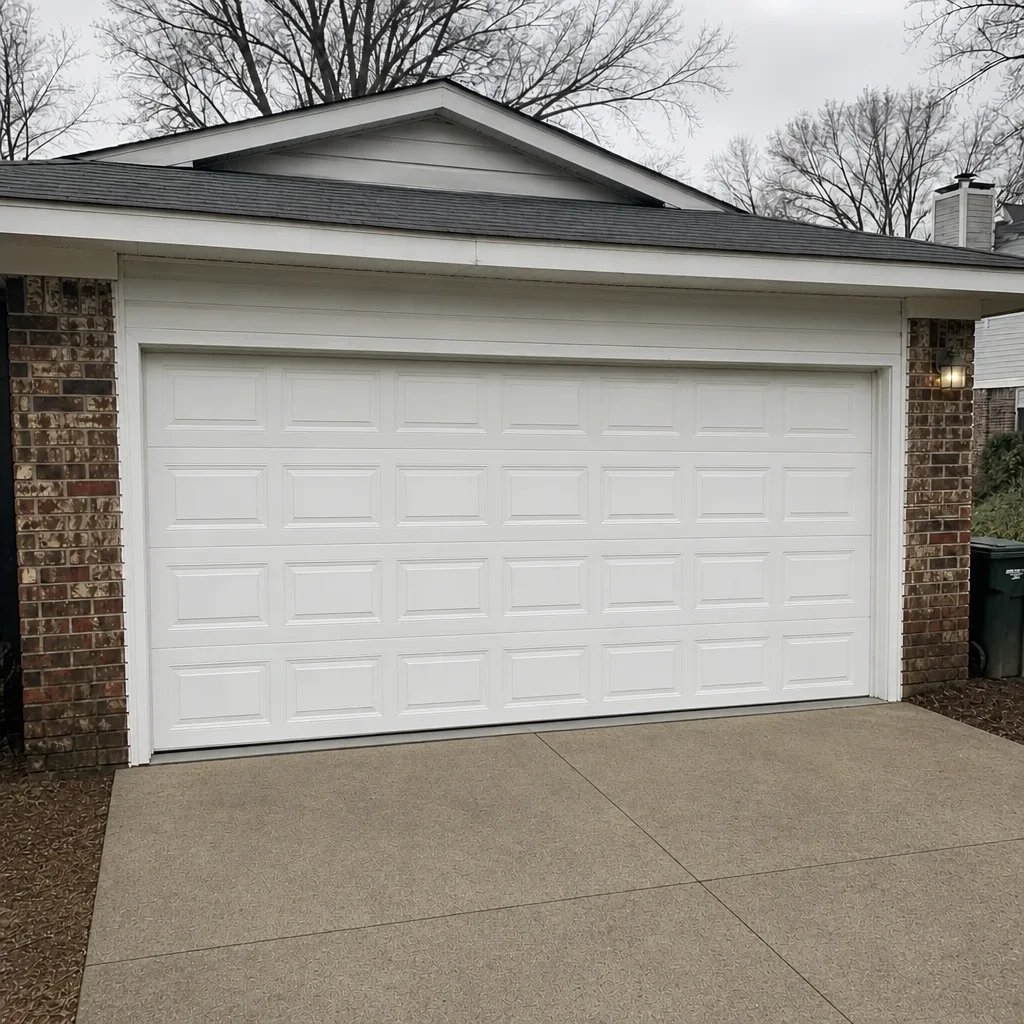 After
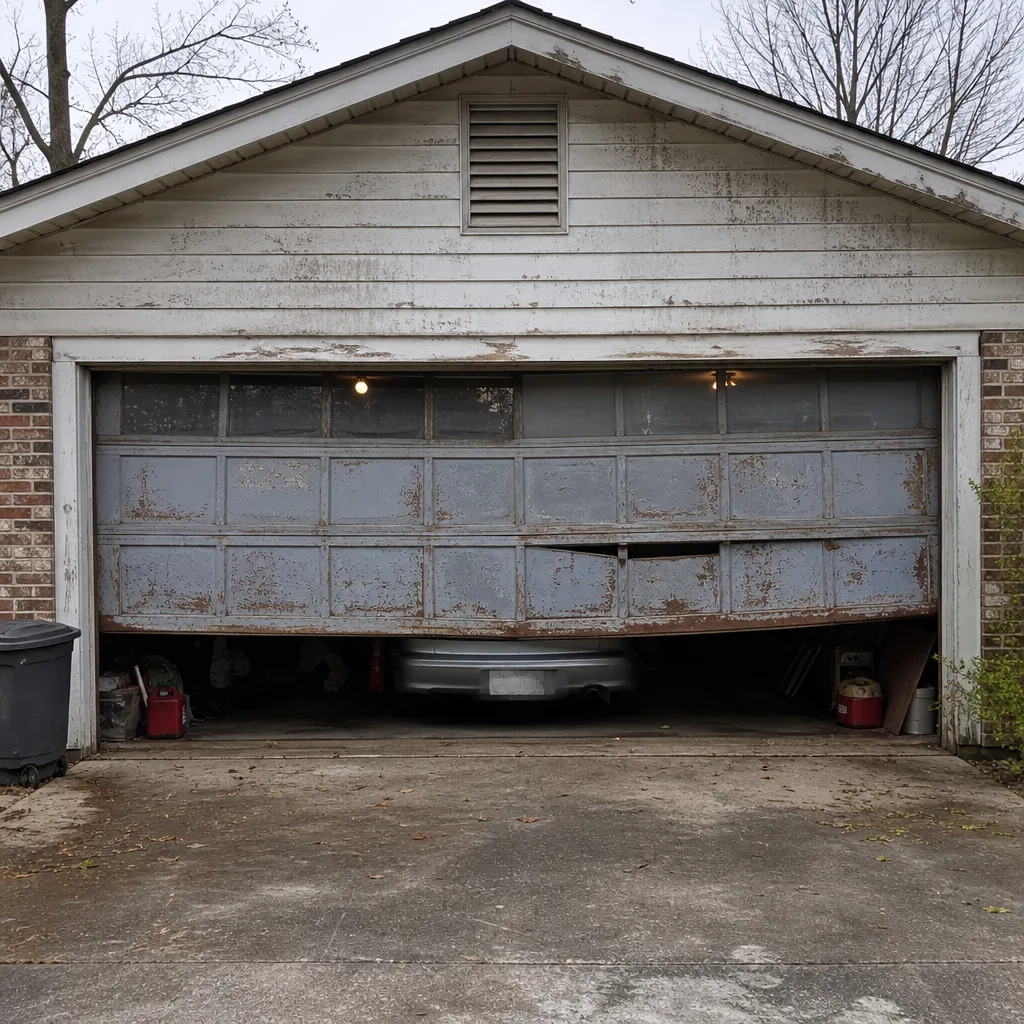 Before
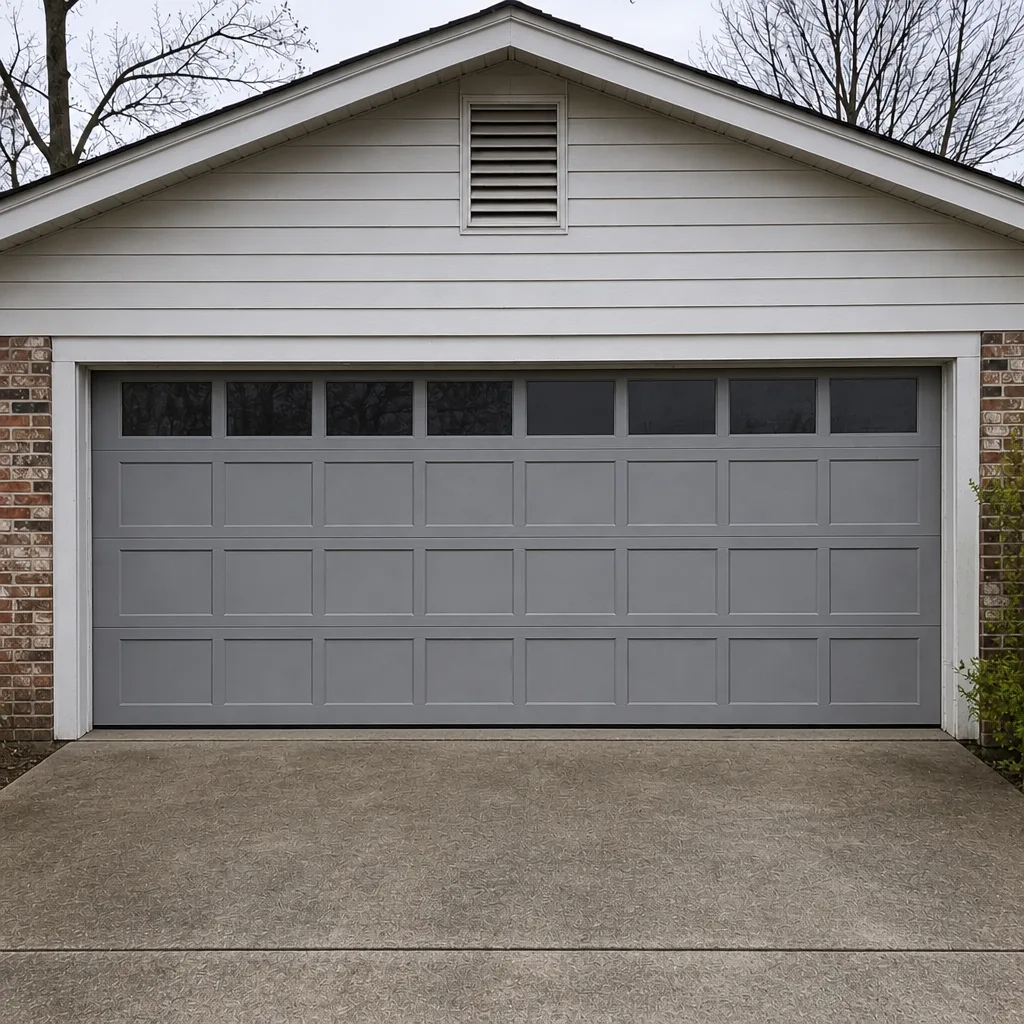 After
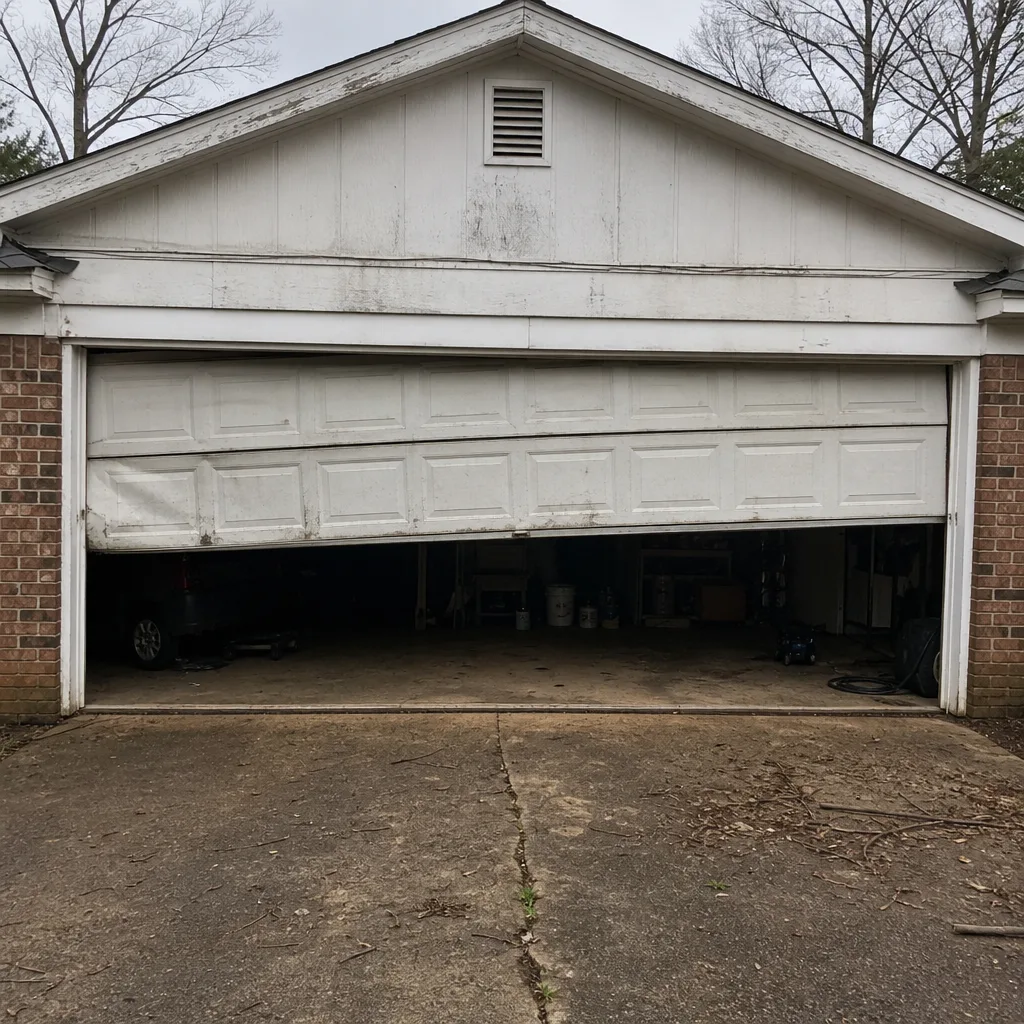 Before
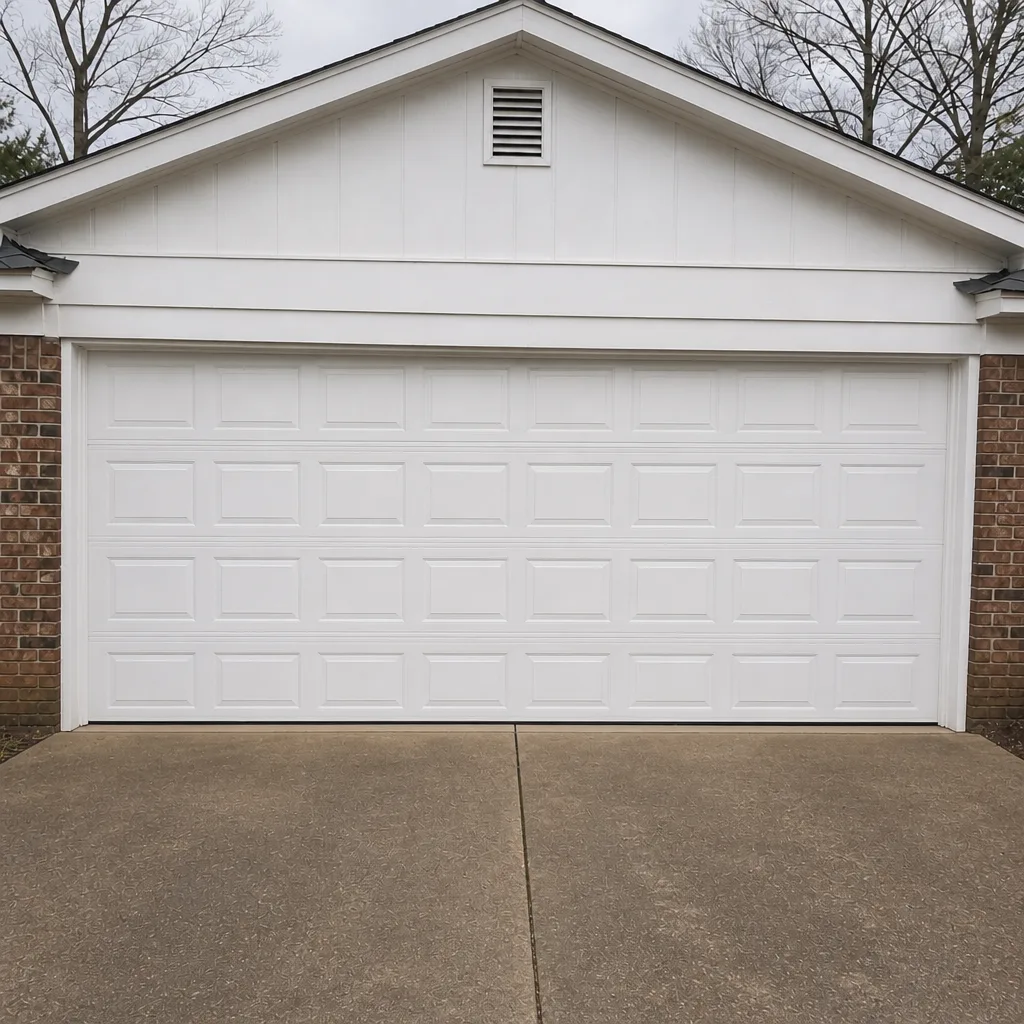 After
When to Call a Professional
Call a technician for any torsion spring, cable, or drum work, for a door that’s jumped its track, and for an opener that smells hot, clicks without moving, or trips a breaker. Call for storm or vehicle damage, for a bottom panel that’s pulling out of the stiles, and for a door that fails the balance test at any point. If you’re unsure, run the two-minute balance test and read the opener’s blink code first. That information will help whoever you call, and it often turns a “new opener” call into a spring or roller repair. Prospect Garage Door Repair offers free estimates in Birmingham. Call (833) 946-3180. We answer 24/7. Fast dispatch from 7am to 7pm, Sunday through Friday. Our technicians have up to 14 years of experience, work across all eight major brands, and quote every job in writing before any work starts.
Frequently Asked Questions
A door that reverses before touching the floor is almost always obeying its safety reverse system, which has detected resistance or a broken sensor beam. Check the two sensor LEDs at the bottom of the track first. If they’re lit and aligned, the door itself is likely binding on the way down because of a stretched cable or a worn roller, and the sensors are working correctly. Call (833) 946-3180 for an exact quote. Estimates are free.
No. A torsion spring stores enough force to cause serious injury, and a snapped spring can whip without warning. Spring replacement requires the right winding bars, the right technique, and a trained technician. This is the one part of garage door repair in Birmingham that homeowners should always hand off. Call us for a free estimate on spring repair.
Prices vary by the part and the door, so the written estimate sets the final price. A sensor alignment or a single hinge is on the low end; a torsion spring replacement or a track realignment sits higher; an opener replacement or a full door replacement is a larger job. The free estimate is quoted and agreed before any work starts, so there’s no surprise on the invoice. Call (833) 946-3180 for an exact quote.
Blink codes tell you which part the opener thinks is failing: on LiftMaster and Chamberlain, one blink usually points to the sensors, two blinks to a broken beam, three to an obstruction or a heavy door, four to a force or travel limit issue, and five to the wall console. Genie uses a similar count with its own mapping. Write the count down and tell us when you call. That one detail speeds the diagnosis.
No. The free estimate is the price you pay for the agreed work. If we find a second problem during the repair (for example, a worn roller alongside a failing spring), we’ll show you and quote it before doing anything. Nothing is added to the bill without your approval. Call (833) 946-3180 to schedule an estimate.
Yes. Central Alabama’s humidity and daily heat cycles accelerate cable fraying, bottom seal deterioration, hinge squeak, and sensor wiring corrosion. Parts that would last their full manufacturer timeline in a dry climate often fail sooner here. Checking the bottom seal, the two lower hinges, and the sensor connections after a heavy rain stretch is the best maintenance habit for a Birmingham door.
Yes. We work on the door in front of us, not just the brand we happen to stock. Our technicians are familiar with LiftMaster, Chamberlain, Genie, Clopay, Amarr, Wayne Dalton, Craftsman, and Raynor, and can identify most doors from the hardware. If your door has an unusual brand, send a photo with your call and we’ll confirm before scheduling.
Repair makes sense when the door is structurally sound and the failure is a spring, cable, roller, hinge, or opener. Replacement makes more sense when multiple panels are failing, the door is out of plumb, or the combined repair approaches the cost of a new door. Because our team installs and repairs, we can tell you which option actually makes sense for your door.
The Bottom Line
Read your door’s behavior before you reach for a repair. Most failures we see in Birmingham aren’t the opener; they’re a spring, cable, roller, or sensor that the opener is faithfully reporting. Use the symptom map, run the two-minute balance test, and read the blink code on the head before you call anyone. Those three habits separate a quick, cheap fix from an expensive replacement. When the diagnosis points to a torsion spring, a cable, or a logic board, hand it to a technician. Prospect Garage Door Repair works on the door in front of us across all eight major brands, and we quote in writing before any work starts. Call (833) 946-3180 for a free estimate. We answer 24/7. Fast dispatch from 7am to 7pm, Sunday through Friday.
Written by the team at Prospect Garage Door Repair.