
Last updated November 15, 2026
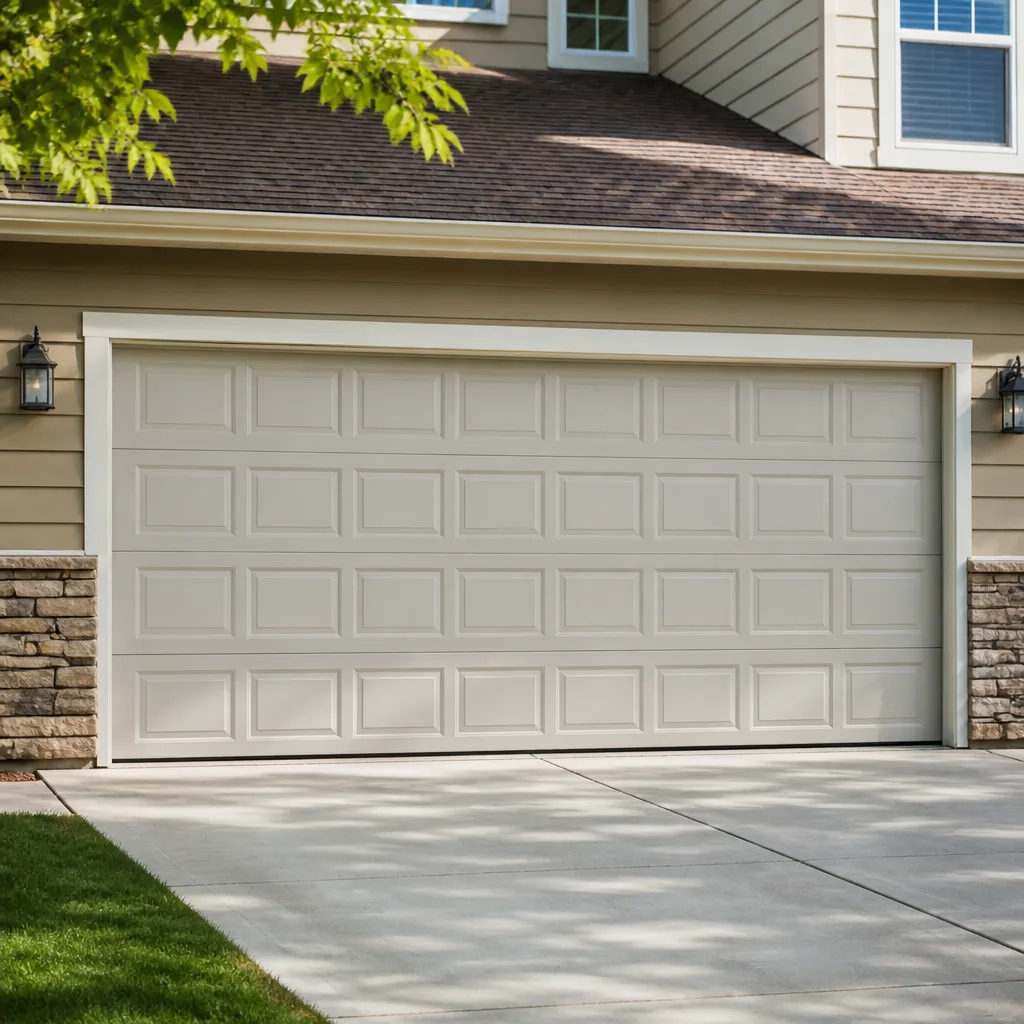 Raised-panel steel
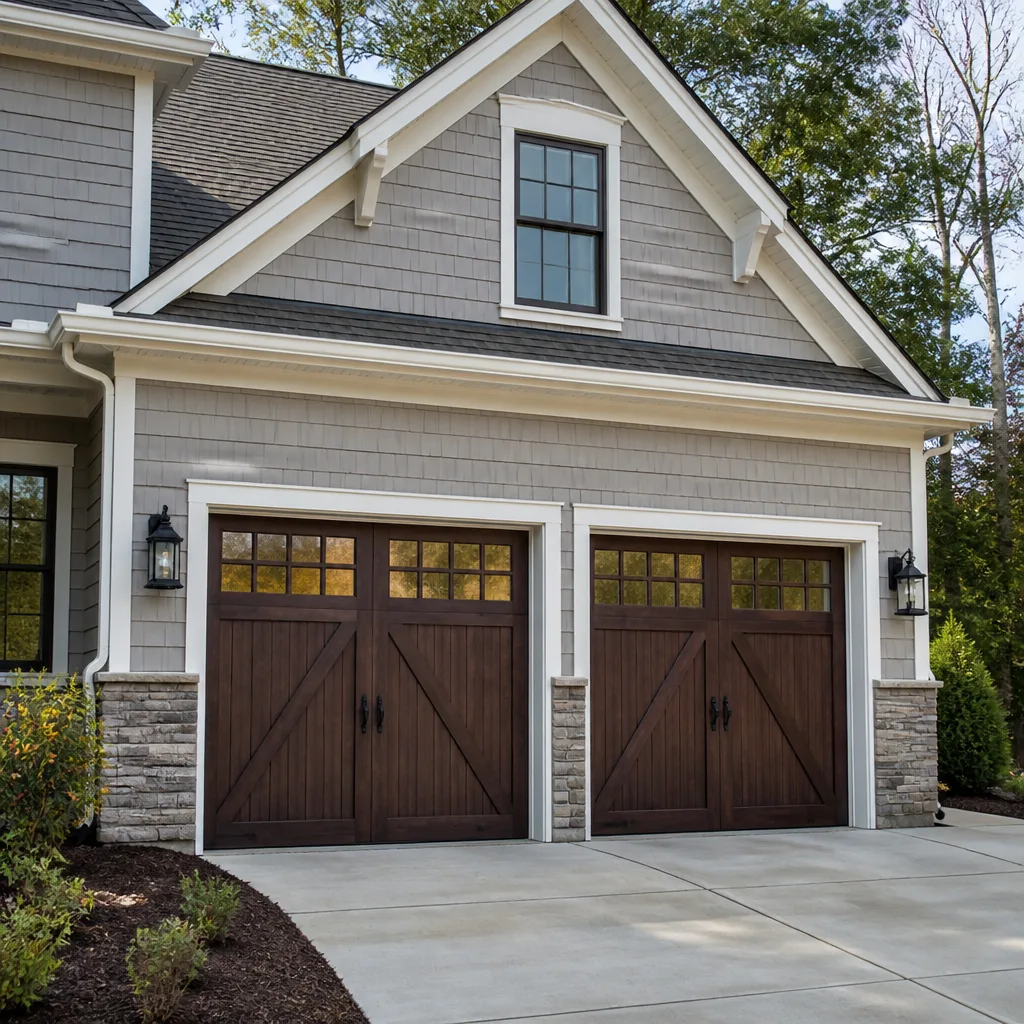 Carriage house
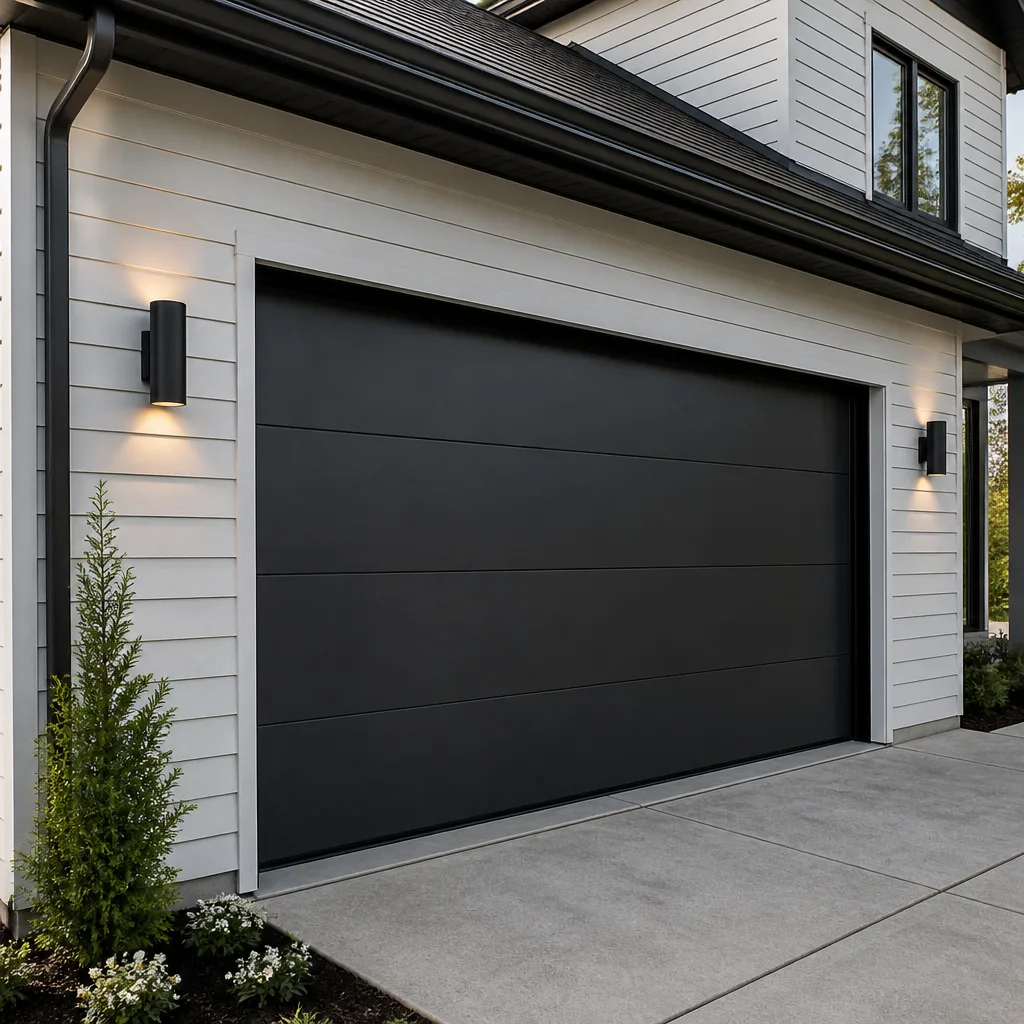 Modern flush
 Full-view glass
 LiftMaster openers
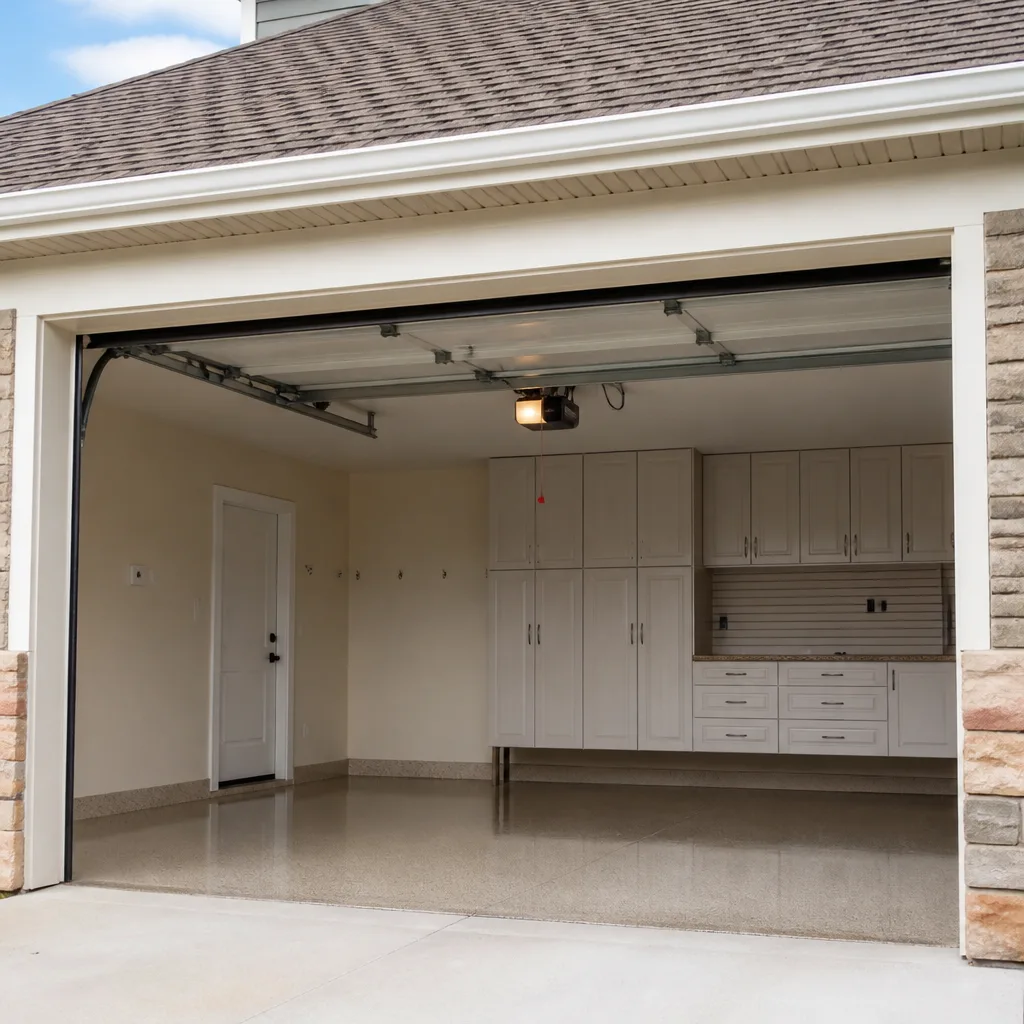 Chamberlain openers
Full 25-point door and opener safety check with every visit - springs, cables, rollers, tracks, and your LiftMaster or Chamberlain opener included
You get a price before we start. It does not change when the pro arrives.
Get your free estimateDIY vs Professional Garage Door: The Birmingham Homeowner’s Decision Guide
Most garage door problems don’t require a professional. A misaligned safety sensor, a remote that won’t sync, a torn bottom seal letting in cold air – these are jobs you can finish in an afternoon with basic tools. But the industry draws a hard line at stored energy, and it’s a line worth respecting. Torsion springs hold enough tension to cause serious hand and arm injuries, and experienced technicians have been killed working on them. That’s the real divide: not whether you’re handy, but whether the part you’re touching can hurt you. This guide sorts every common garage door task in Birmingham into three buckets – safe DIY, professional tools needed, and do-not-touch – so you know exactly where your limits are.
Quick Answer
The divide between DIY and professional work on a garage door isn’t about skill. It’s about stored energy. Anything that releases the tension in a torsion spring, extension spring, cable, or the door itself belongs to a trained professional, full stop. Almost everything else – weather seal, sensor alignment, remote programming, lubrication, dent repair on a steel panel – is safe to do yourself with the right parts. When in doubt, call a professional for a free estimate rather than guess at a spring.
Styles & brands we work with
- Raised-panel steel
- Carriage house
- Modern flush
- Full-view glass
- LiftMaster openers
- Chamberlain openers
Table of Contents
- The Task-by-Task Breakdown: What’s Safe DIY and What Isn’t
- Why Springs Are the Line You Don’t Cross
- Tools and Knowledge You Actually Need for Safe DIY Tasks
- The Real Cost of a DIY Mistake in Birmingham
- How to Scope a Job Before You Call Anyone
- Alabama Liability and Insurance After a Door-Related Incident
- Birmingham Conditions That Affect Any Garage Door Decision
- When to Call a Professional
The Task-by-Task Breakdown: What’s Safe DIY and What Isn’t
Every garage door service call falls into one of three categories. Sorting your problem into the right one before you pick up a wrench saves money and, in the case of the third category, saves fingers.
Tier 1: Safe DIY. These tasks use household tools, have no injury risk if you follow reasonable care, and don’t affect the tension or alignment of the door as a mechanical system.
- Bottom weather seal replacement – the rubber or vinyl strip at the bottom of the door. Pull the old one, slide the new one into the retainer, done.
- Safety sensor alignment – the two small photo-eye units near the bottom of the tracks. If the door won’t close, they’re usually out of line or blocked by debris.
- Remote and keypad programming – pairing a new remote to a LiftMaster, Chamberlain, Genie, or Craftsman opener is a sequence of button presses, nothing more.
- Lubrication – hinges, rollers, and the spring if it’s an extension type. We’ll cover the right lubricant below.
- Panel dent repair on a steel door if the dent hasn’t deformed the track or the panel’s structural edge.
- Track cleaning – wiping down the inside of the vertical and horizontal tracks where debris collects.
Tier 2: Professional tools, no special injury risk. These jobs need more than a household toolkit, but a careful homeowner with mechanical confidence can manage them.
- Roller replacement – you’ll need a specific wrench and C-clamps to hold the door while a hinge is unbolted. Doable, but the door weight matters.
- Hinge replacement on a door that’s been lubricated regularly. Stuck bolts are the main obstacle, not danger.
- Opener logic board or motor capacitor replacement – only if you’re comfortable with low-voltage electronics and can source an exact replacement board for your model.
Tier 3: Do not touch. These jobs involve parts that hold the entire weight of the door or release stored tension. No homeowner should attempt them.
- Torsion spring replacement or adjustment – the horizontal spring above the door.
- Extension spring replacement – the springs that run alongside the horizontal tracks.
- Cable replacement or re-spooling – the cables that attach the bottom corners to the spring system.
- Bottom bracket removal – the bracket that connects cable to door. These are under load.
- Track straightening where the track has bent – bending it back usually deforms the door’s alignment and can load the cables unevenly.
Why Springs Are the Line You Don’t Cross
Here’s the mechanical reality behind the rule. A torsion spring holds the entire weight of the door – typically 130 to 250 pounds for a standard single-car door, more for a double. Engineers wind it under significant tension so it counterbalances the door’s weight throughout its travel. When that spring is intact, it’s doing roughly the work of two strong people lifting the door all day. When it fails or is released uncontrolled, that stored energy releases instantly through the spring, the winding bars you’re using, or the cable system.
Extension springs do the same job through a different geometry, and they’re often fitted with a safety cable that runs through the spring’s center as a containment measure. Many older doors in Birmingham neighborhoods like Crestwood, Forest Park, and Southside still have extension spring systems without that containment. If one lets go, the spring becomes a projectile. The failure mode alone should tell you this isn’t work to learn on YouTube.
The specific hazard in spring work is that the only way to safely release tension is with the correct diameter steel winding bars, inserted fully into the winding cone, used in sequence by someone who knows how much tension remains. A screwdriver or piece of stock steel – which is what most DIY tutorial videos suggest – doesn’t distribute the load correctly and slips under pressure. That slip is the mechanism behind most of the serious injuries that come out of this work.
There’s an economic angle too. Spring work done by a trained technician who has handled hundreds of doors takes maybe 45 to 90 minutes including balancing the door afterward. A homeowner attempting it for the first time spends hours sourcing the correct spring for their door’s exact weight rating, risk-free winding is not a thing, and if the door goes out of balance the opener starts wearing out the door panels. In our experience the DIY calculation gets worse, not better, every time you look at it honestly.
Tools and Knowledge You Actually Need for Safe DIY Tasks
Not a “you need a screwdriver” list. Here’s what each safe-DIY job actually requires.
Weather seal replacement
You’ll need a utility knife, a flat pry bar or a thin putty knife to loosen the old seal from its retainer, and a replacement seal matched to the retainer style. Retainer styles vary: some use a U-shaped channel that takes a slide-in bulb seal, others use a nail-on or screw-on aluminum retainer. Measure the retainer’s inside width before you buy. A seal that’s a millimeter too thick will drag on the floor and trigger the safety reversal every time the door closes.
Safety sensor alignment
Tools needed: your eyes, a soft rag, and possibly a Phillips screwdriver. The two sensors should be mounted at the same height, facing each other within their bracket’s adjustable range. A small LED on each unit glows steadily when they’re receiving signal and blinks when they aren’t. If one LED is out entirely, you have a wiring problem, not an alignment problem, and that’s a technician job.
Lubrication
Use a lithium-based grease or a purpose-made garage door lubricant on hinges and rollers. Do not use silicone spray on hinges; it doesn’t have the staying power under load. Do not use WD-40 as a long-term solution, because it penetrates and cleans but doesn’t leave a film that survives under door weight. For the torsion spring itself, a small amount of the same door lubricant is fine. For extension springs, a light oil on the coil surface.
Remote and keypad programming
Every opener has a specific sequence. Most modern LiftMaster and Chamberlain units use a learn button on the motor head; press it once, then press the remote button twice and you’re paired. Genie and Craftsman systems vary more and often need the opener’s model number and manufacture date to program correctly. This is where amateur work sometimes gets stuck: if the opener was installed by a previous owner, you may not know the model without opening the light cover and reading the label inside.
Roller replacement (Tier 2)
You’ll need a socket set, a C-clamp or two to hold the door panel in place while a hinge is loose, and the exact replacement roller – nylon rollers run quieter than steel on the jambs, and they last longer in Birmingham’s humid summers. Before you take a hinge loose, put the door in the fully closed position and clamp both sides of the panel you’re working on. Releasing one hinge without that clamp lets the door’s weight shift and can pull the cable out of alignment.
The Real Cost of a DIY Mistake in Birmingham
The DIY math usually looks simple: a spring costs less than a service call, so why pay someone? That math only works if you get it right. When it goes wrong, here’s what actually happens.
Parts availability. Garage door springs are not universal. They’re specified by wire gauge, inside diameter, length, and wind direction. A spring sourced from a general hardware store is often the closest match, not the correct one. An incorrect spring either fails early or loads the door unevenly, and you’re back to square one with a bent opener rail. Sourcing the correct spring for your door in Birmingham means either knowing the exact specs before you buy or measuring the old spring on the door, which requires removing the old spring, which is the dangerous step.
Warranty voids. Door manufacturers and opener manufacturers routinely exclude warranty coverage on damage caused by improper installation or adjustment. Sticking a spring on yourself can void the door panel warranty if a panel later cracks near the bottom bracket. The savings you thought you were chasing disappears when a $700 panel becomes your problem.
The premium for fixing botched work. When a homeowner calls a technician to clean up a DIY attempt gone wrong, the technician is diagnosing two problems: the original failure and the damage done during the attempted repair. The price typically runs higher than a clean repair because the door is now out of balance, the track may be deformed, and any number of small parts have been disturbed. In our experience, the cleanest repair is almost always the first one.
Panel misalignment. Doors that get forced into a “closed but not latched” position during a DIY repair often bend the vertical track slightly. That looks like a small problem and behaves like a bigger one: the door hangs up, the opener strains, and eventually the opener’s logic board fails from the repeated cycle load. A track realignment takes a technician minutes; a new opener doesn’t.
How to Scope a Job Before You Call Anyone
A garage door quote is only accurate if the technician knows what they’re walking into. If you can describe the problem precisely on the phone, you’ll get a real estimate; if you can only say “the door is broken,” the estimate is a range that will likely shift once the technician arrives. Here’s how to gather the right information before you call.
- Note the door’s position. Is the door stuck fully open, fully closed, halfway, or offline from the track? Each of these points to a different failure – spring failure usually means the door is down and won’t lift; a cable failure often leaves the door crooked; an opener problem means the door moves freely by hand but won’t respond to the remote.
- Identify the door’s make and model if you can. Look on the inside face of the top panel or on the bottom bracket for a manufacturer’s sticker. Clopay, Amarr, Wayne Dalton, and Raynor all use stickers that list the model. That one label tells the technician whether a replacement part is stocked or sourced.
- Identify the opener’s brand and model. LiftMaster, Chamberlain, Genie, and Craftsman are the four most common residential brands. The model label is usually under the light cover or on the back panel. If your opener has a smart hub or WiFi module, note that too – it changes which logic boards are compatible.
- Note the age of the door and opener as best you know. Not so we can guess at the failure, but because a 25-year-old door may not have a replacement panel available, and that changes whether repair or replacement is the right answer.
- Describe the noise. A grinding sound may be a roller problem. A snapping or popping sound usually means spring failure. A clicking sound from the opener could be a stripped gear or a bad relay. The sound often narrows the diagnosis more than anything else you can tell us.
- Check the safety sensors. One quick look at the sensors before you call will tell you whether you have a sensor problem (you can fix it yourself) or a mechanical problem that needs a technician.
- Note whether the door is level across the bottom. A door that sits unevenly means cable or spring failure, not opener failure, and the technician needs to know that before scheduling.
This is also how you avoid an upsell. If the technician can diagnose from your description and the on-site inspection, and quote a price for that specific repair, you’ll know the quote is for the actual problem. A quote that’s offered before the technician sees the door, or one that covers “the general problem,” is worth questioning. For an honest repair diagnosis, our garage door repair team will scope the job with you before any work begins.
Alabama Liability and Insurance After a Door-Related Incident
Garage door incidents have a way of turning into insurance questions, and homeowners in Birmingham should understand what their policy does and doesn’t cover before an incident happens, not after.
Standard homeowners policies typically cover sudden accidental damage to the structure of the home, which in some cases includes the garage door and the attached opener. If a door fails and falls, or a panel is damaged in a way that creates a security gap, the structural repair may fall under your dwelling coverage, subject to your deductible. What policies generally do not cover is damage caused by improper installation or attempted repair by the homeowner. If a spring you installed fails and damages the door, the failure is often treated as maintenance negligence rather than an accidental event, and your insurer may decline the claim.
There’s also the liability side. If a door falls on a visitor or a delivery driver, or a door that doesn’t reverse properly strikes someone, your personal liability coverage handles the claim – but only if the door was being maintained in reasonable working order. A door that hasn’t been serviced in years and doesn’t reverse on obstruction creates a liability exposure that a claims adjuster will look at carefully.
What this means practically: keep receipts for any professional repair, don’t attempt the spring or cable work yourself, and if your door is more than a decade old, have it checked once. If you’re not certain whether your current policy treats garage door repair as dwelling coverage or as maintenance, call your insurer and ask. We can also work with your insurer on documentation if a claim is in progress. For questions specific to your situation, our team serving Birmingham can walk through what a repair will and won’t fix.
Birmingham Conditions That Affect Any Garage Door Decision
Garage doors in Birmingham live in a specific mechanical environment, and it changes the calculus on some repairs.
Humidity and heat. Birmingham summers are humid, and the humidity reaches the garage. Steel door panels sweat on the interior surface during rapid temperature shifts, and that condensation collects at the bottom edge and behind the bottom bracket. Steel panels that rust at the bottom edge are a common Birmingham problem on doors that are 15 years old or more. Before you decide to repaint a panel, look at the bottom edge from the inside. If the steel is compromised there, a new panel is usually the better answer than a spot repair.
Spring cycle life. Standard torsion springs are rated in cycles, not years. A door that runs up and down twice a day in a household where both partners leave for work has a very different cycle count than a door that runs four times a day. Birmingham’s climate doesn’t affect cycle life directly, but the humidity does affect the rollers and cables – rust on cable strands is a common cause of cable failure in this region. If your door’s cables show rust flecks, that’s a technician check, not a wait-and-see.
Older housing stock. Birmingham neighborhoods like Highland Park, Norwood, and Avondale have garages that were built when extension springs were the norm. Those systems often lack the containment cable that modern installations include. If you have a door with extension springs and no safety cable through the center, that’s a professional retrofit, not a DIY weekend job. It’s a small upgrade with real safety value.
Newer subdivisions. Homes in areas like Hoover, Vestavia Hills, and Trussville often have builder-grade LiftMaster or Chamberlain openers installed in the last 15 years. Those openers have specific parts available and are usually an easy repair. A quote that proposes replacing the whole opener when a $30 logic board would solve the problem is one to question.
Common Mistakes to Avoid
- Using a screwdriver to wind a torsion spring. This is the mistake that sends people to the emergency room. The correct tool is a pair of steel winding bars sized to the spring’s cone. If you don’t own them, the job is professional-only.
- Buying a spring by brand name instead of specification. A “LiftMaster spring” isn’t a thing. Springs are specified by wire gauge, inside diameter, length, and wind direction. Buy the wrong one and you’ll be back on the ladder within a year.
- Lubricating the track. The track is supposed to stay dry – lubricating it collects grit and damages the rollers. Only lubricate hinges, rollers, and springs, and use the right lubricant type.
- Ignoring a bent track. A slightly bent track causes the door to hang up, and the hang-up strains the opener. A track adjustment is quick; a new opener isn’t.
- Skipping the C-clamp on a roller or hinge repair. Without a clamp holding the panel, releasing a hinge lets the door shift and can pull the cable out of alignment. The clamp costs $8 and saves the repair.
- Using “universal” sensors or openers. Safety sensors and opener motors are matched to their system. A universal sensor may not communicate with a Genie opener, and a mismatched opener may not drive a specific door’s weight. Match the brand and model.
- Leaving a door in a failed state “until it’s convenient.” A door stuck open in Birmingham is a security gap, and it also puts continued strain on the remaining spring or cable. If a spring fails, the door should not be operated.
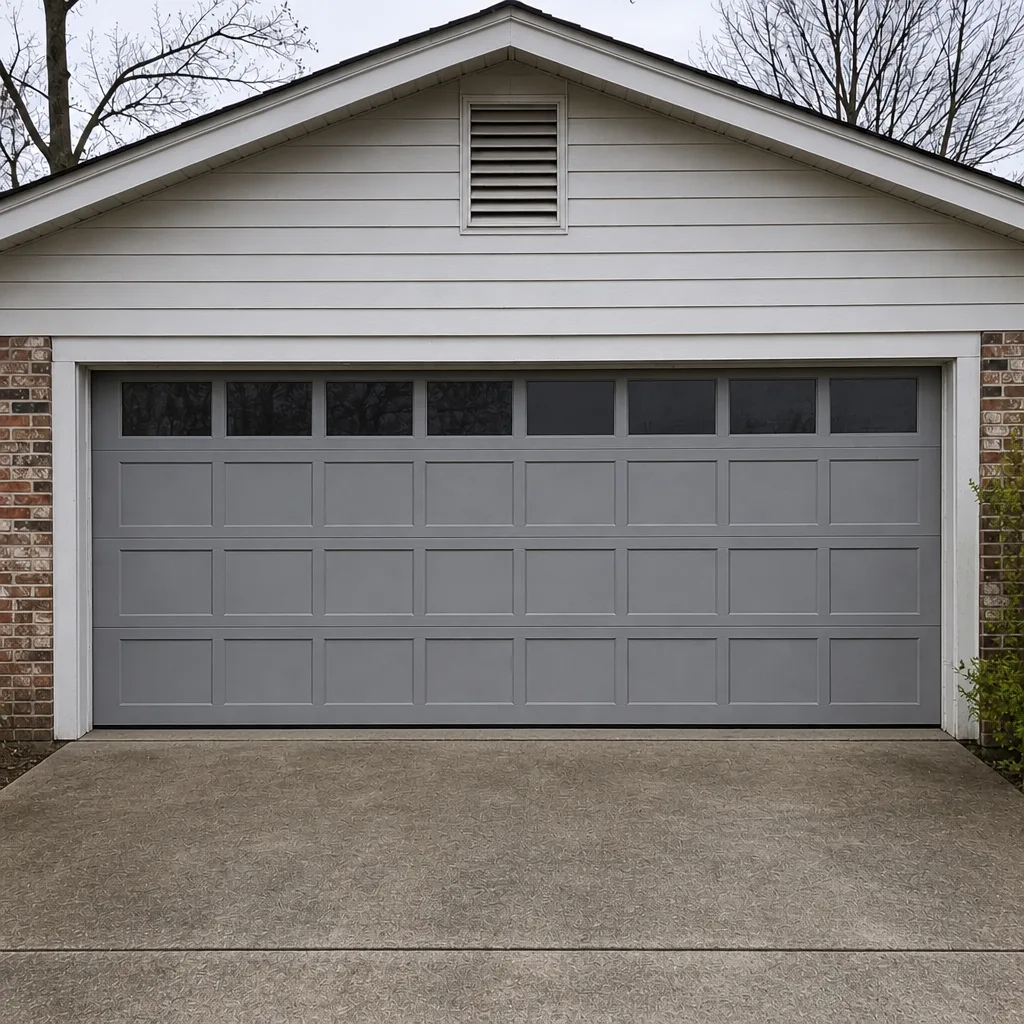
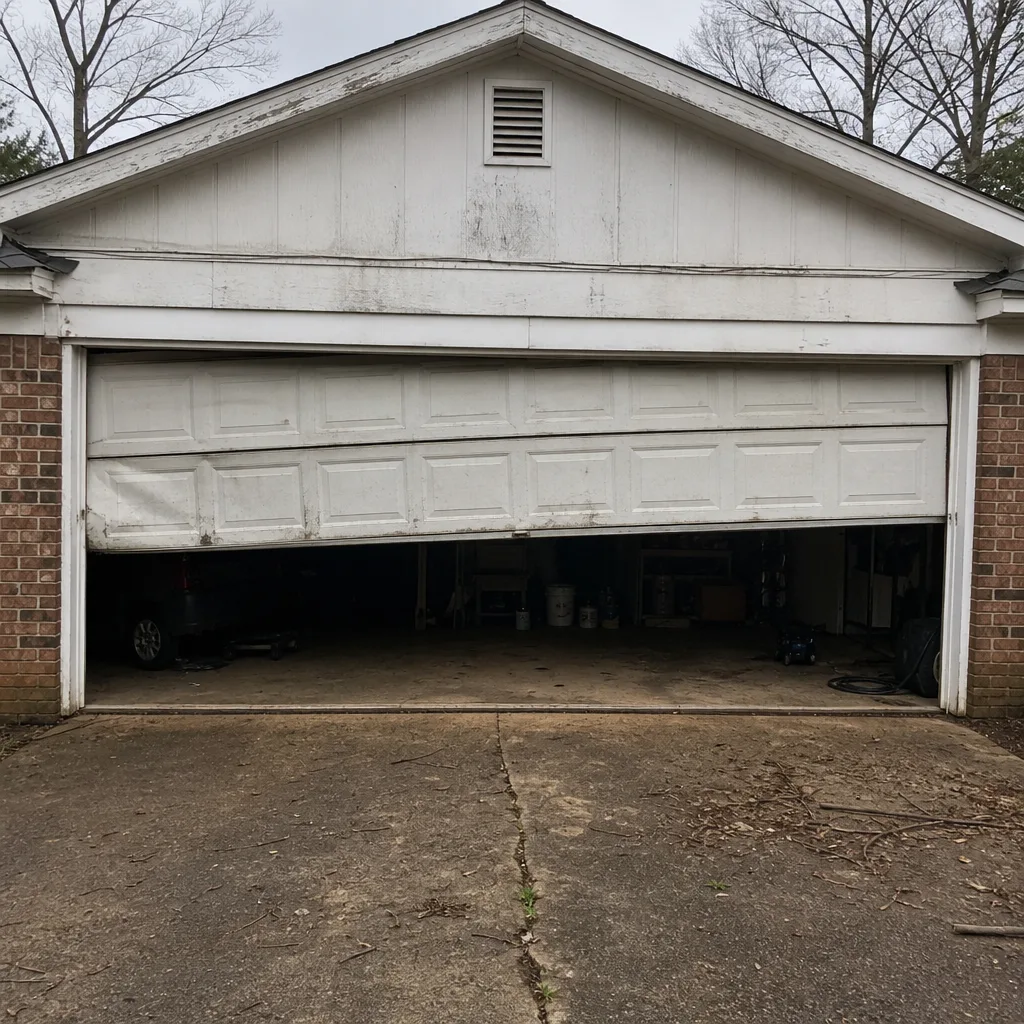
See the difference
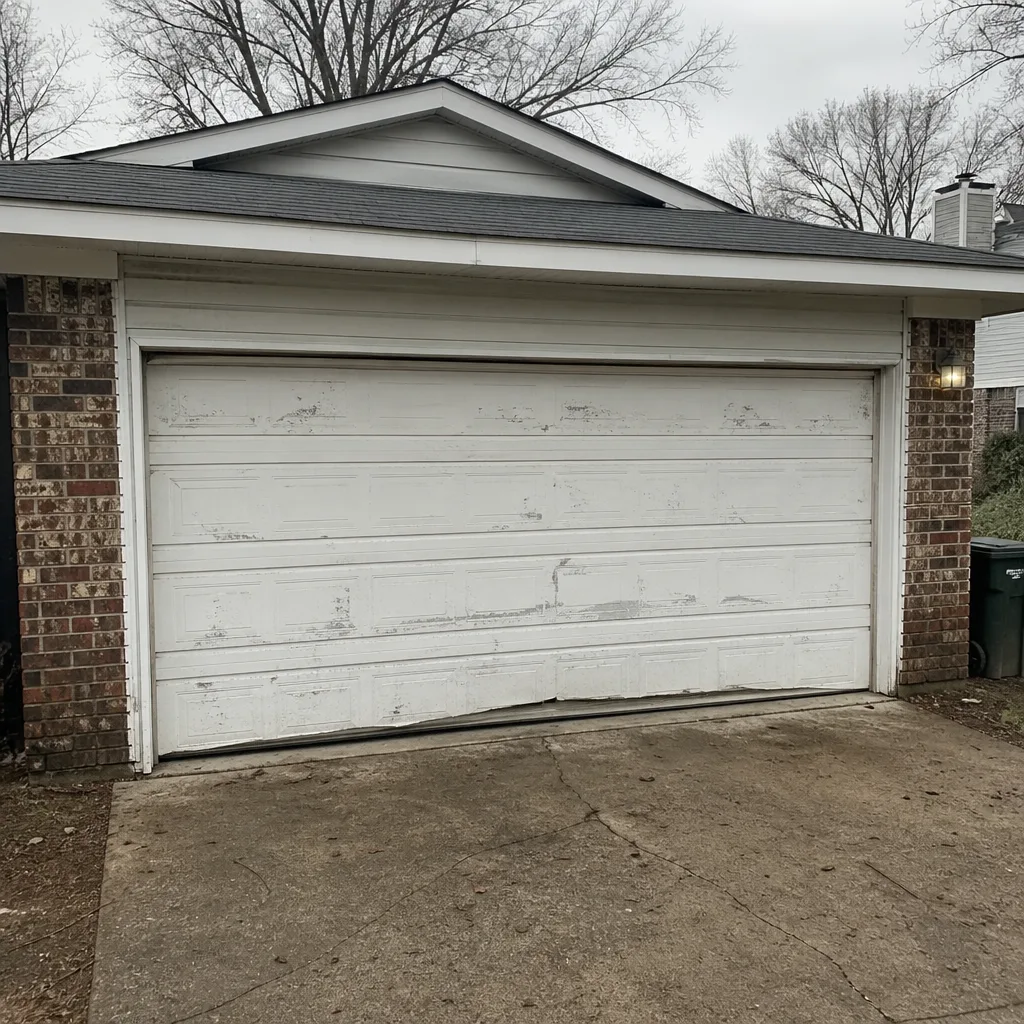 Before
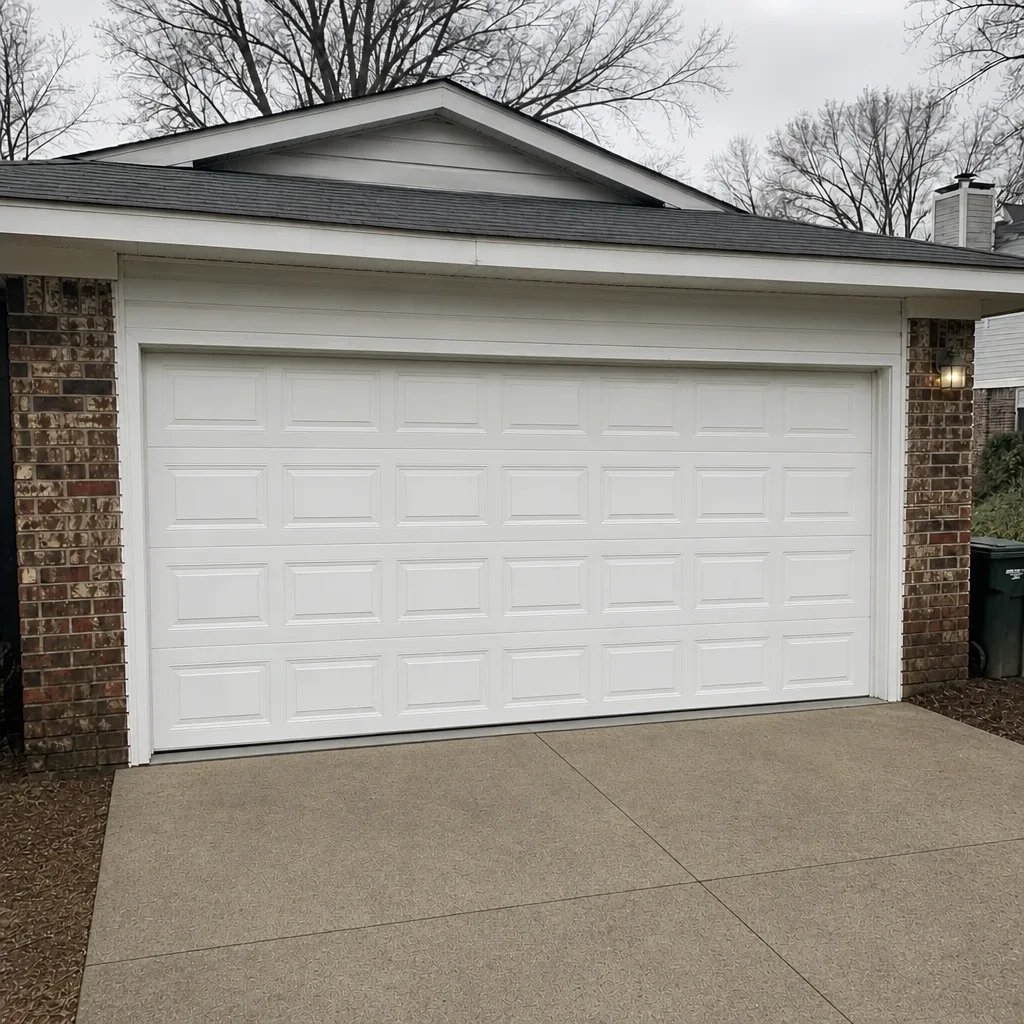 After
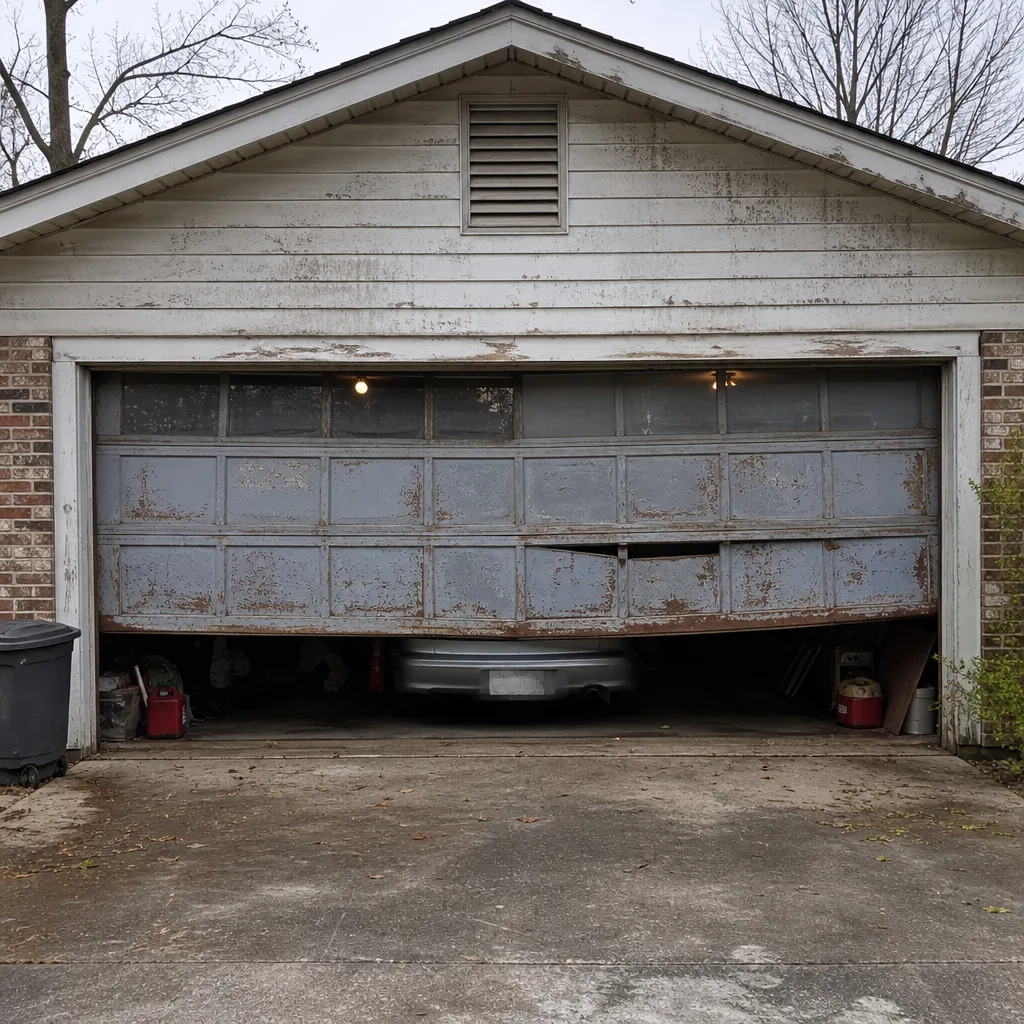 Before
 After
 Before
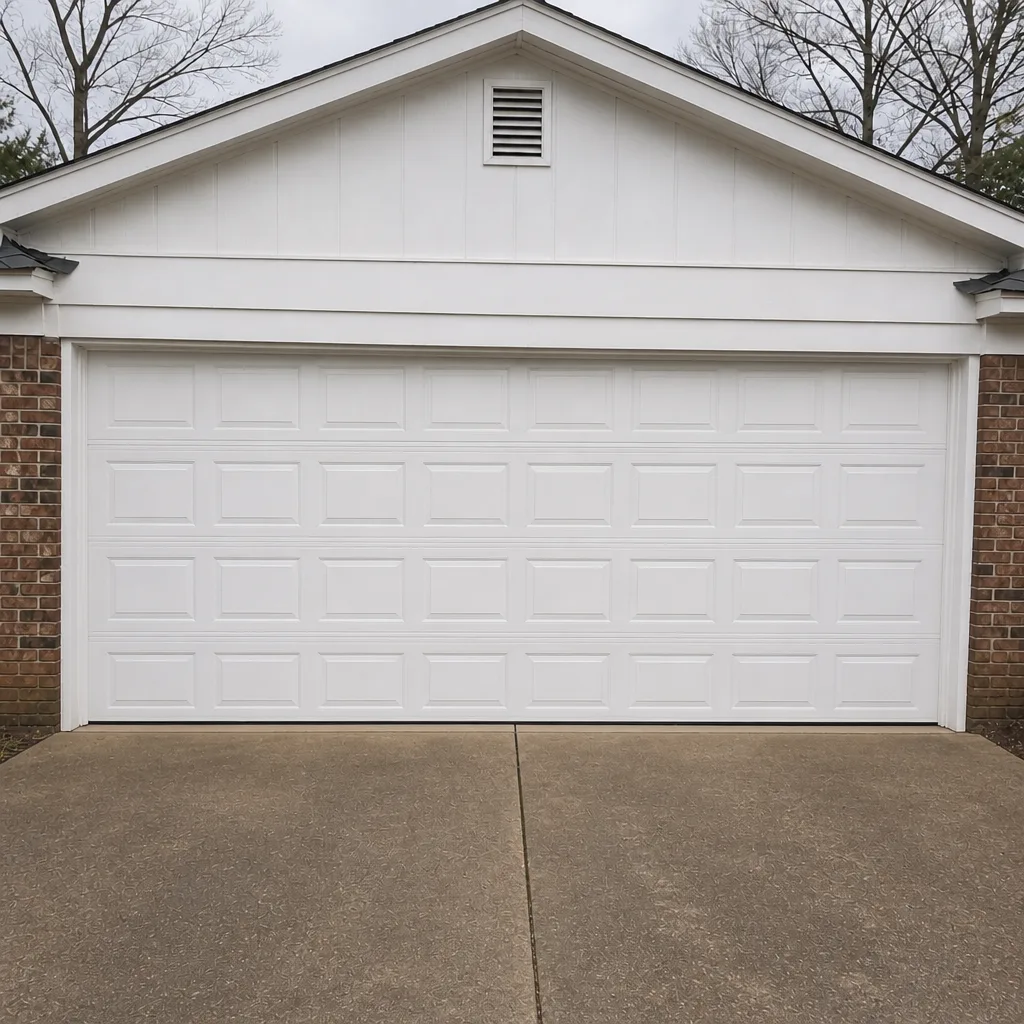 After
When to Call a Professional
Here’s when the decision is already made. Call a technician if the door won’t lift or is stuck halfway; if you can see the spring has broken (there’s a visible gap in the coil); if the door is crooked or hangs unevenly; if you hear a snap or pop followed by the door becoming immovable; if a cable has come off its drum or shows rusted strands; if the door fails the reversal test (place a 2×4 flat on the floor and close the door; if it doesn’t reverse on contact, the opener needs adjustment); if the door has extension springs with no safety cable; or if your opener is more than 15 years old and unresponsive. Any of these puts you in the professional camp without question.
Prospect Garage Door Repair offers free estimates in Birmingham. We work on LiftMaster, Chamberlain, Genie, Craftsman, Clopay, Amarr, Wayne Dalton, and Raynor systems – which means we’ll tell you whether repair makes sense or whether replacement is the smarter call, without being locked into one brand answer. Call (833) 946-3180. We answer 24/7. Fast dispatch from 7am to 7pm, Sunday through Friday.
Frequently Asked Questions
No. Replacing a torsion spring is one of the few genuinely dangerous jobs on a home, and it’s not a skill question. The spring holds the full weight of the door under tension, and releasing it incorrectly with the wrong tools has caused amputations and deaths among experienced technicians. The job requires matched steel winding bars and specific spring specs. Call a professional for free estimates across Birmingham, including Crestwood, Forest Park, and Highland Park.
Typical repair ranges in the Birmingham market run roughly $150 to $300 for a spring replacement on a single door, $180 to $340 for a pair of matched torsion springs, and $120 to $250 for a sensor or opener repair. Track and roller service typically lands in the $100 to $200 range. These are estimate ranges for planning; the written quote is the final price, and it’s given before any work begins. Call (833) 946-3180 for an exact quote – estimates are free.
Yes, in most cases. Bottom weather seal replacement is one of the genuinely safe DIY tasks: the seal slides into or clips over a retainer at the bottom of the door, and replacing it requires only a utility knife and, sometimes, a pry bar. The main thing is matching the retainer style when you buy the replacement. A seal that’s too thick drags on the floor and trips the reversal, so measure before buying.
The most common outcome is a door that’s out of balance, which loads the opener unevenly and can bend the track. In that case, the technician is fixing two problems – the original failure and the damage done during the attempt – and the price typically runs higher than a clean repair would have cost. If the failed repair involves a spring or cable, do not attempt to operate the door; call a professional. Call (833) 946-3180 for a free estimate.
Our technicians are experienced and insured, and our technicians have up to 14 years of experience working on LiftMaster, Chamberlain, Genie, Craftsman, Clopay, Amarr, Wayne Dalton, and Raynor systems. We’ll tell you what needs to be fixed and whether a repair makes sense compared to a replacement. Ask for documentation of insurance and licensing when the technician arrives – any reputable professional will provide it.
Possibly. Standard homeowners policies typically cover sudden accidental damage to the structure, including the garage door in some cases, subject to your deductible. Damage caused by improper installation or attempted DIY repair is generally excluded. Call your insurer to confirm your specific policy’s treatment of garage door repair, and keep documentation of any professional repair you hire.
The Bottom Line
The DIY vs professional question for garage doors lands in one place: identify which tier of task you’re facing before you start. Weather seal, sensor alignment, lubrication, remote programming, and panel dents are safe DIY tasks with real savings. Spring, cable, bottom bracket, and track straightening work belong to a professional – not because you lack skill, but because the stored energy in these parts is beyond what a homeowner can safely manage. Birmingham’s humidity adds roller and cable checks to any door that’s been sitting, and older neighborhoods with extension springs may need a safety cable retrofit. When you’re unsure, a free estimate tells you what a professional repair would actually cost – and that’s usually less than the price of a botched attempt.
Written by the team at Prospect Garage Door Repair.
Ready to get a straight answer on what your door actually needs? Call (833) 946-3180 for a free estimate from our garage door opener repair team. We work on every brand system we’ve referenced here, and we’ll tell you honestly whether repair or replacement is the right move. Call (833) 946-3180. We answer 24/7. Fast dispatch from 7am to 7pm, Sunday through Friday.